About the Museum

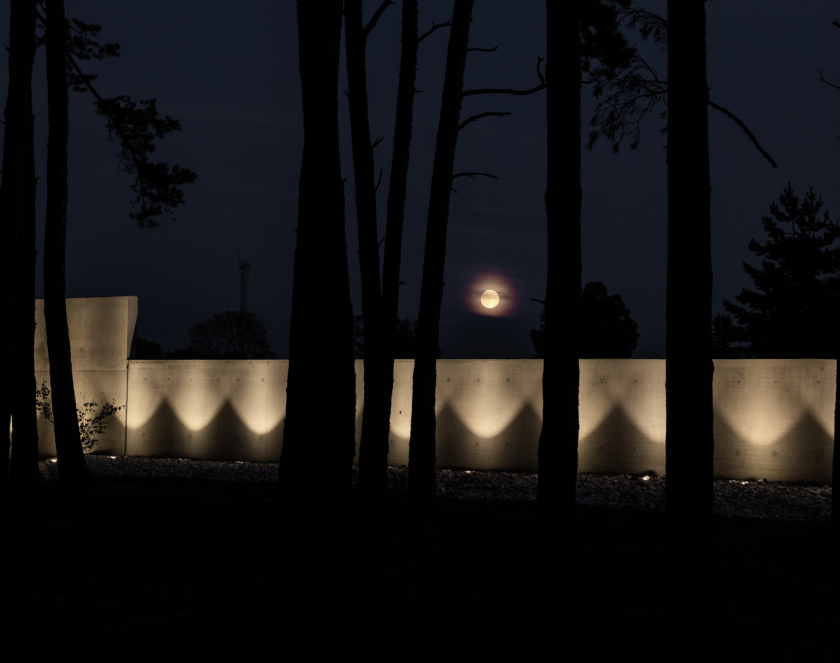
A night-time photograph; a section of a concrete wall and tree trunks, with a full moon above them.
Following the end of World War II, the former grounds of the German Nazi extermination camp in Sobibór were forgotten for nearly twenty years. Deprived of proper protection and oversight, the area was susceptible to numerous acts of desecration and destruction. The first initiatives to commemorate the site were not undertaken until the early 1960s. That coincided with the trials of the Nazi oppressors in Hagen, Germany, and in Krasnodar, then USSR.

The First Commemoration
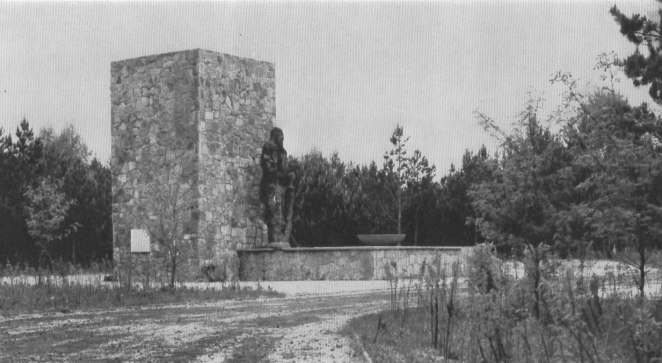
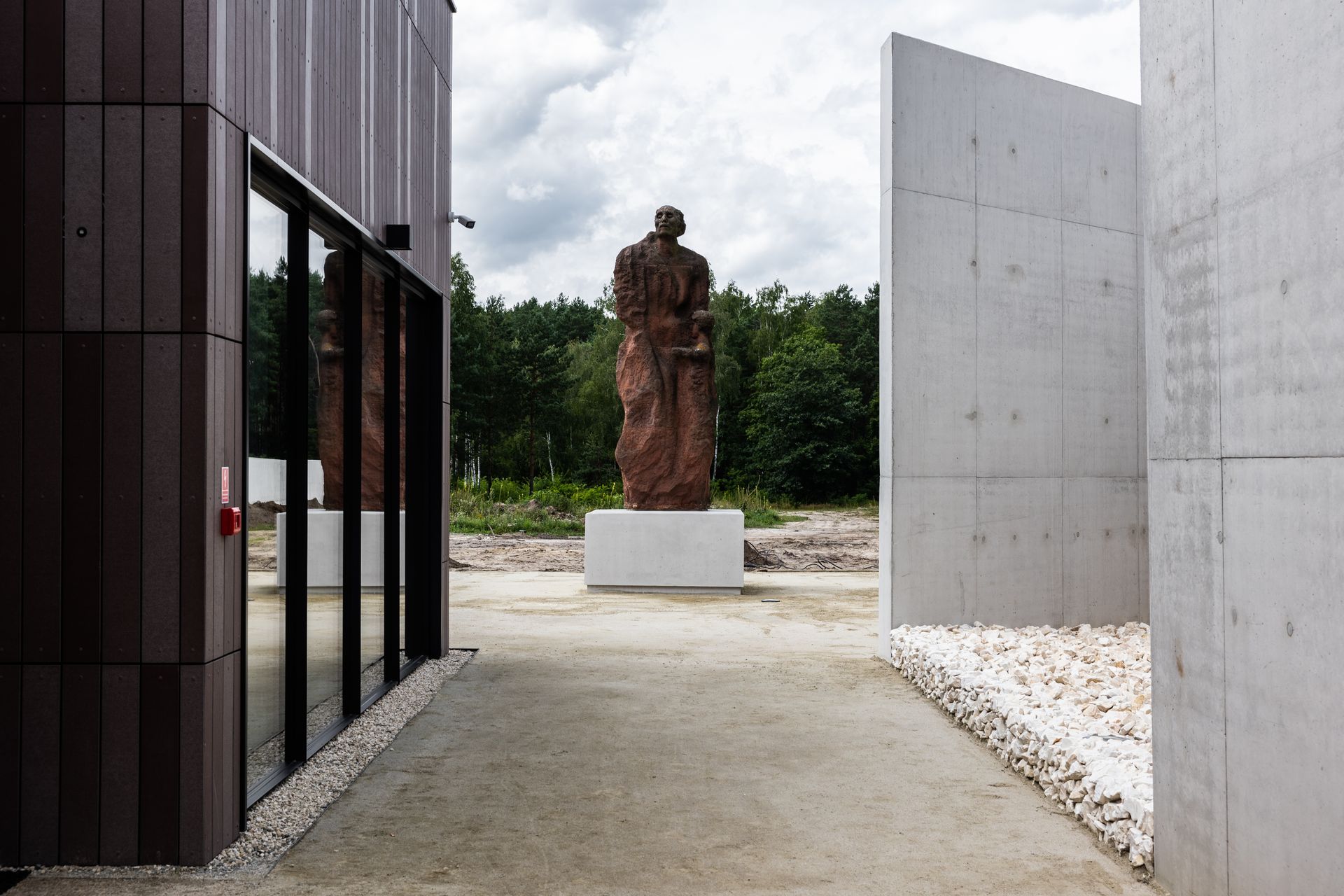
The first commemoration concept was created by engineer Romuald Dylewski. Its primary element was the walking path demarked from the railway ramp, through the former camp grounds, to the mound with the victims ashes located in the area where bodies had been buried and burned. A monument was placed in the middle of that route, which had the form of a prism made of stone blocks, which alluded to the gas chambers building. A statue of  a mother cuddling a child, created by Mieczysław Welter, was attached to it. The monument was unveiled on 27 June 1965. The commemorative plaque installed at that time contained false information about 250,000 Soviet POWs that perished in the camp.

A black-and-white photograph showing a monument at the Sobibór extermination camp depicting a Mother and Child, set on a concrete plinth; in the background, a concrete and stone prism, surrounded by small trees.
Commemoration of the death camp in Sobibór, 1970s.
The First Museum

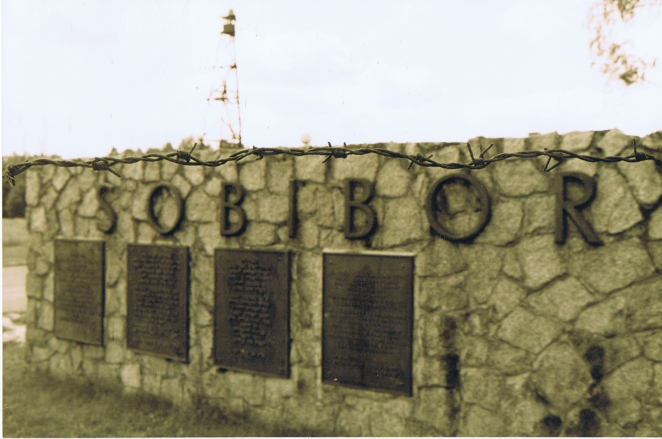
In 1993, on the 50th anniversary of the prisoner uprising in Sobibór, the Museum of the Former Death Camp was opened as a branch of the local Museum of the Łęczna and Włodawa Lake District. The ceremony, during which a memorial plaque informing that 250,000 Jews had been murdered in Sobibór, was attended by many survivors.

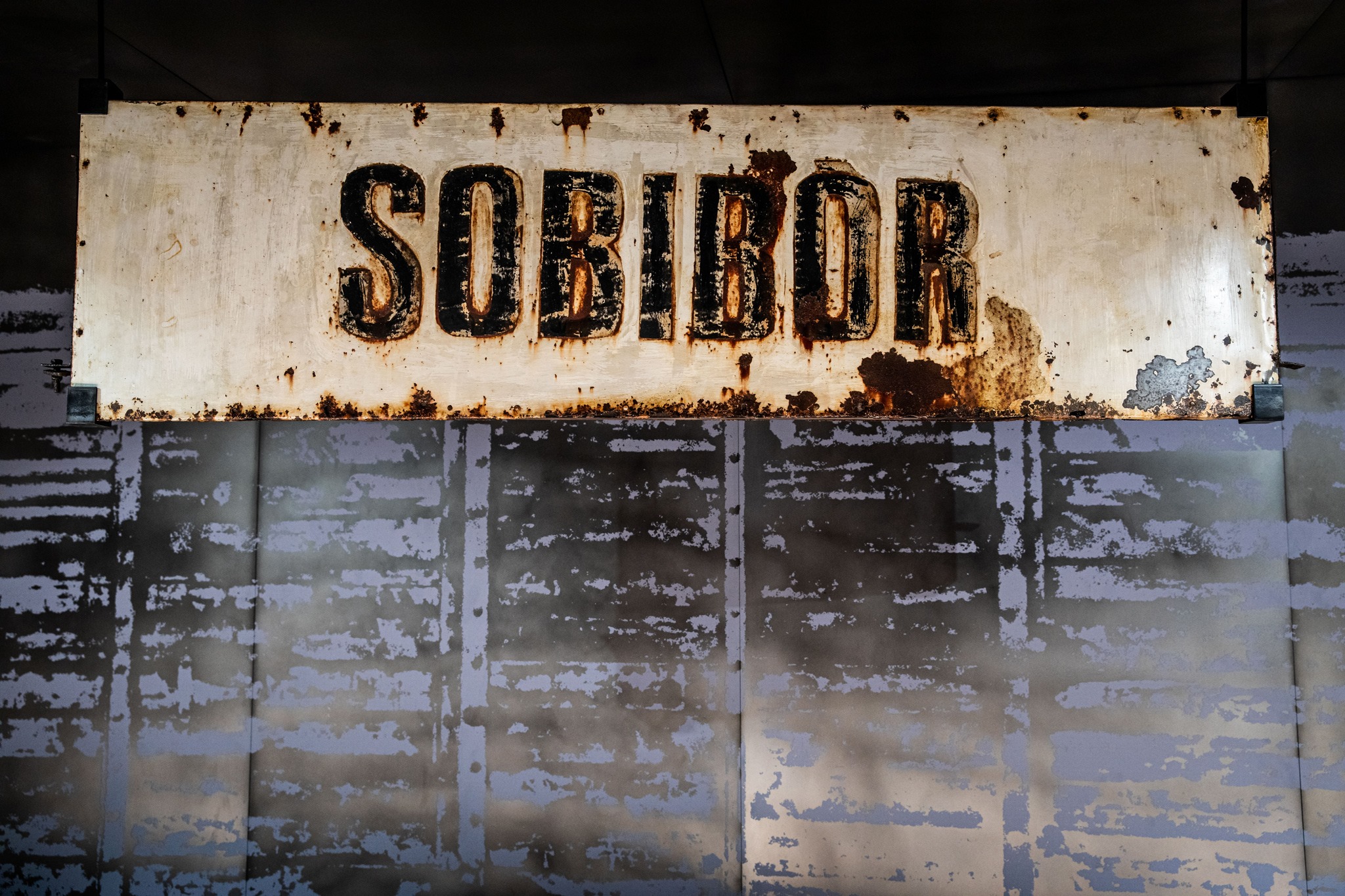
A stone wall with metal letters forming the word ‘SOBIBOR’, with four metal plaques featuring raised engravings below.
Remembrance Wall, photograph taken in 2003.

Alley of Remembrance

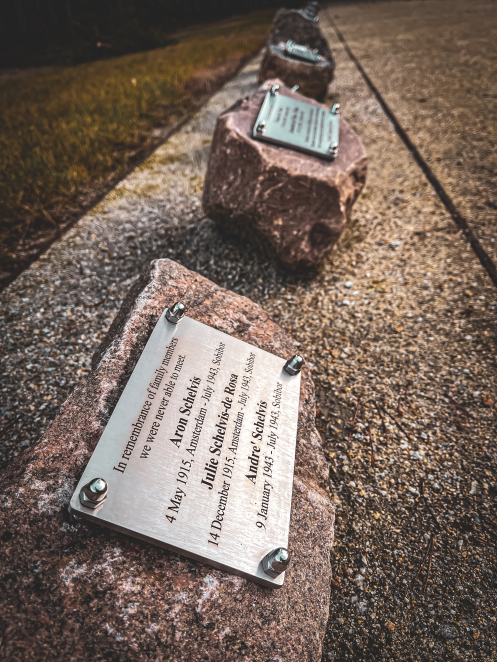
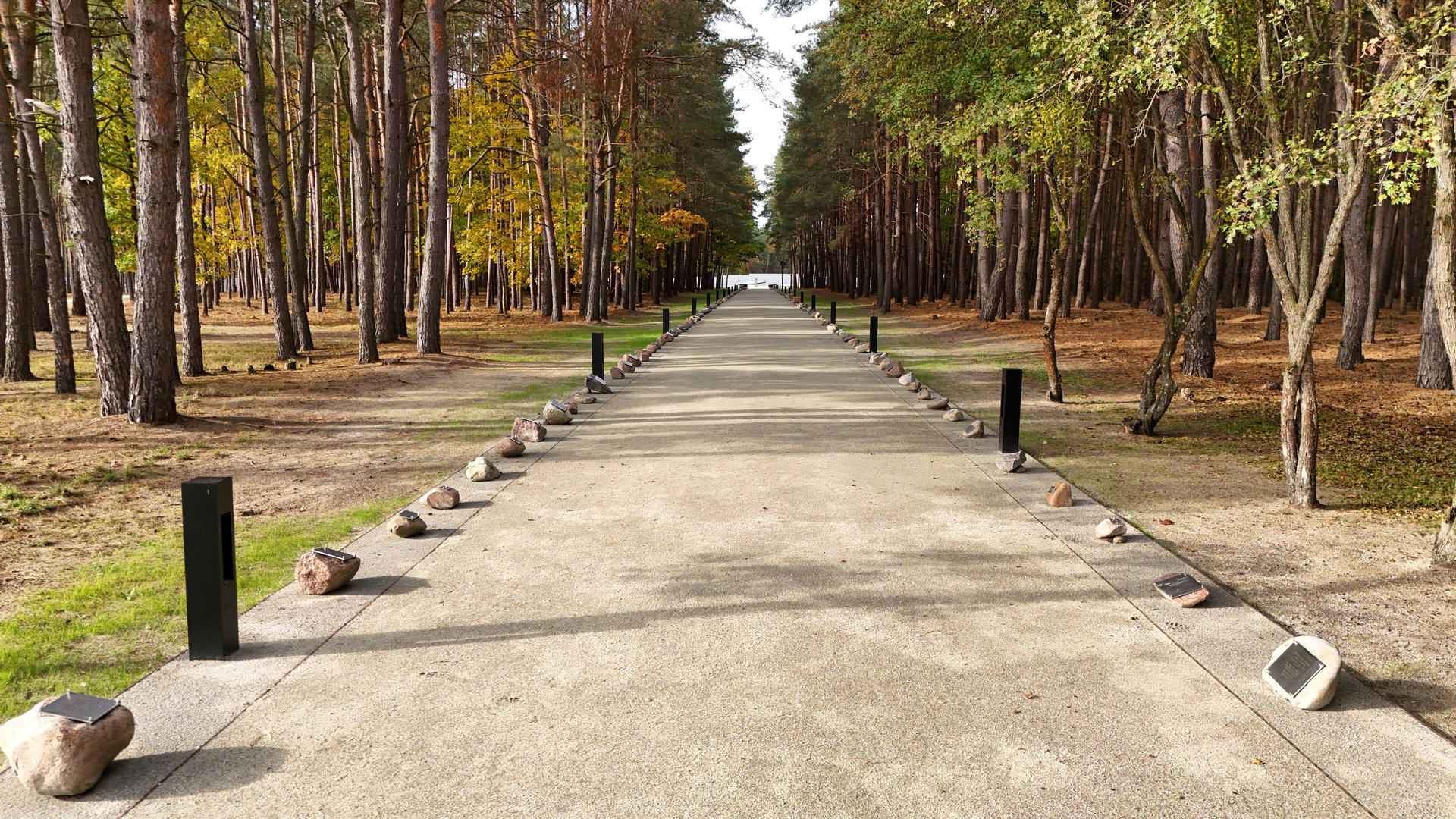
The Alley of Remembrance was created on the former camp grounds in 2003, by the initiative of social organisations including Bildungswerk Stanislaw Hantz from Kassel, Germany, the Stichting Sobibor foundation from the Netherlands, and the Association for Sobibór Commemoration from Poland. Stones with plaques bearing the names of particular victims or certain communities with information about their origins and history were paced on both of its sides.
Row of stones with metal plaques placed along the gravel path.
Commemorative stones at the Alley of Remembrance
A path leading through the forest, with deciduous and coniferous trees on either side of the path, as well as stones bearing metal plaques.
Alley of Remembrance

New Commemoration Project
In 2008, Poland, the Netherlands, Slovakia (three states the citizens of which were the majority of the Sobibór victims) and Israel initiated joint measures aimed at creating the new Museum and Memorial. The old Museum of the Former Death Camp became a branch of the State Museum at Majdanek in 2012.

The new curator began its work towards creating a new architectural-landscape commemoration design. The concepts were developed by an International Steering Committee with members coming from the aforementioned countries. An international contest for projects was held, within the course of which the concept prepared by the architect team of Marcin Urbanek, Piotr Michalewicz, Łukasz Mieszkowski, and Mateusz Tański was selected.
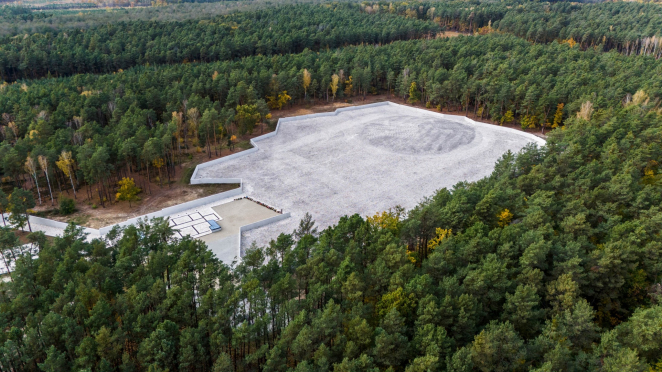
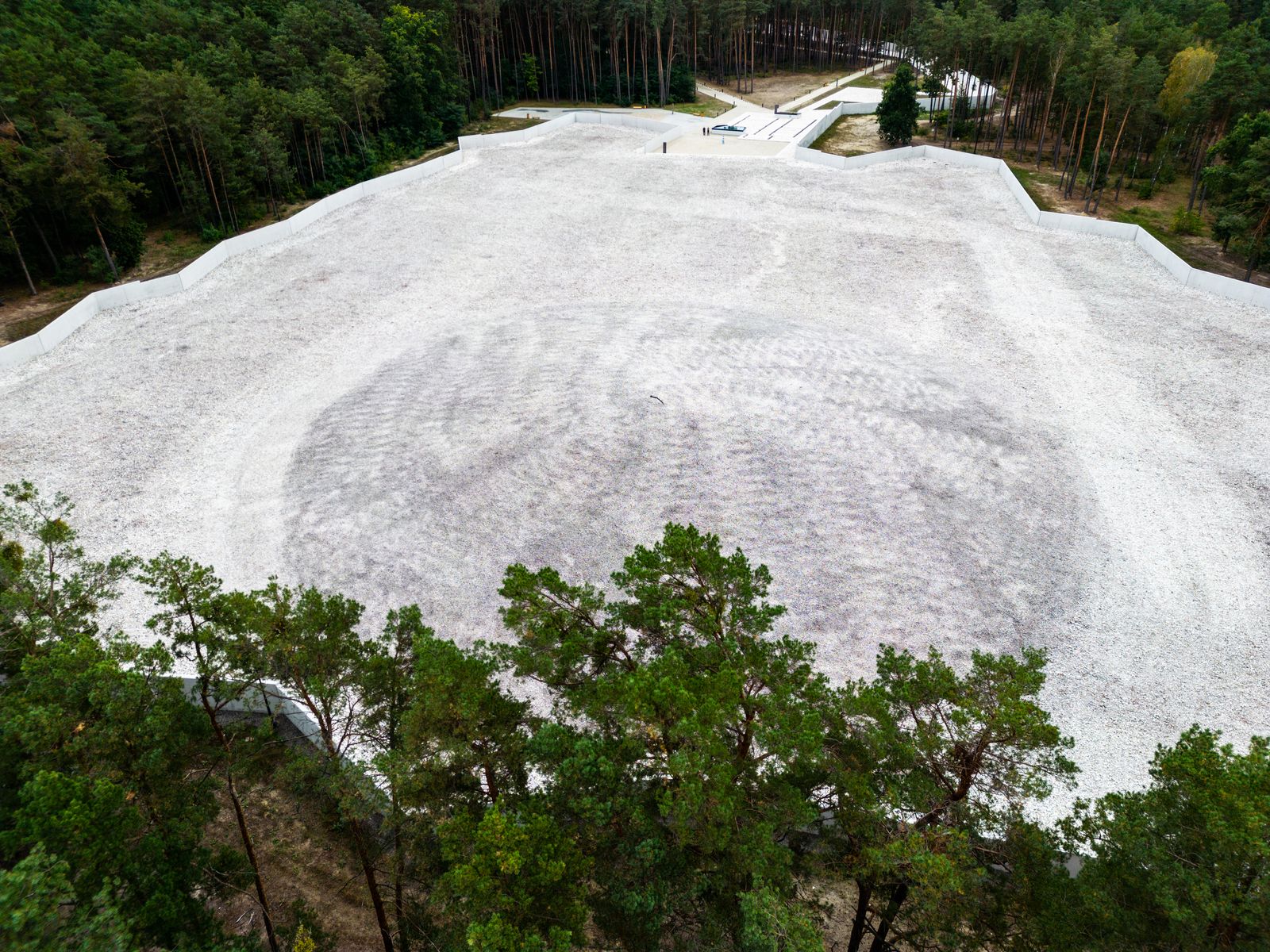
Aerial photograph, huge graveyard covered with white stones and enclosed with a concrete wall is visible among the vast forest.
Museum and Memorial in Sobibór

Museum Building and the Clearing with Mass Graves

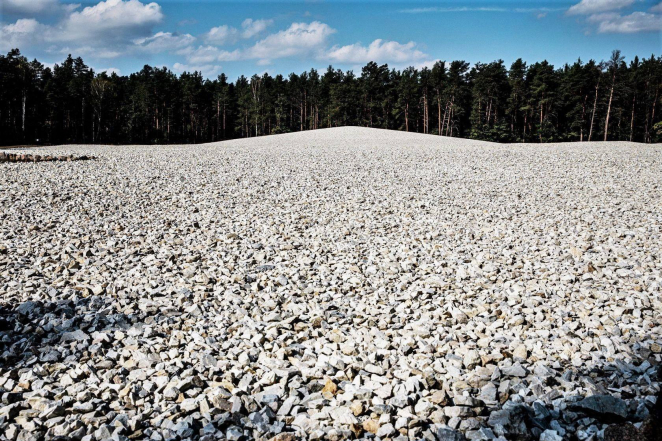
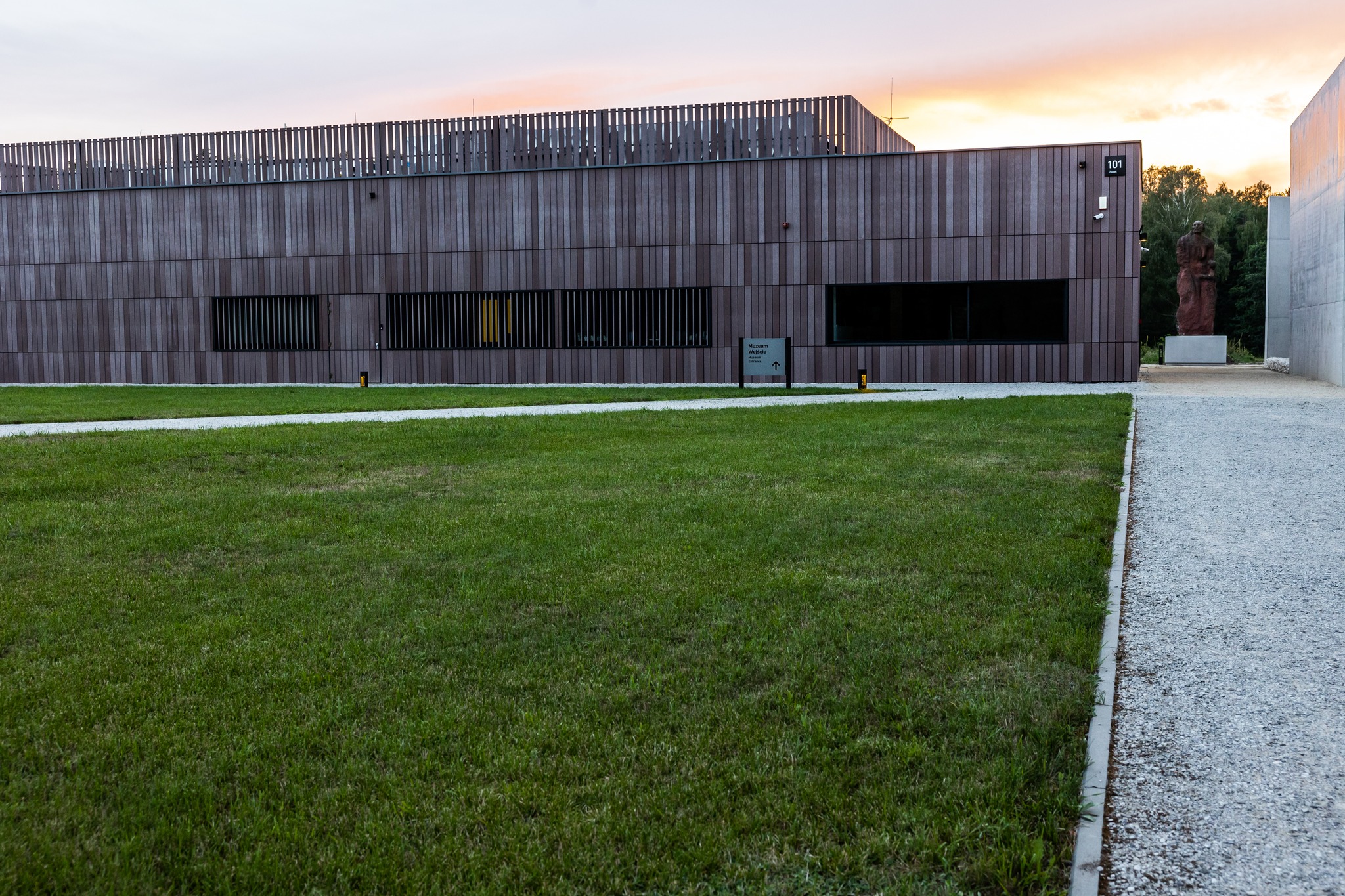
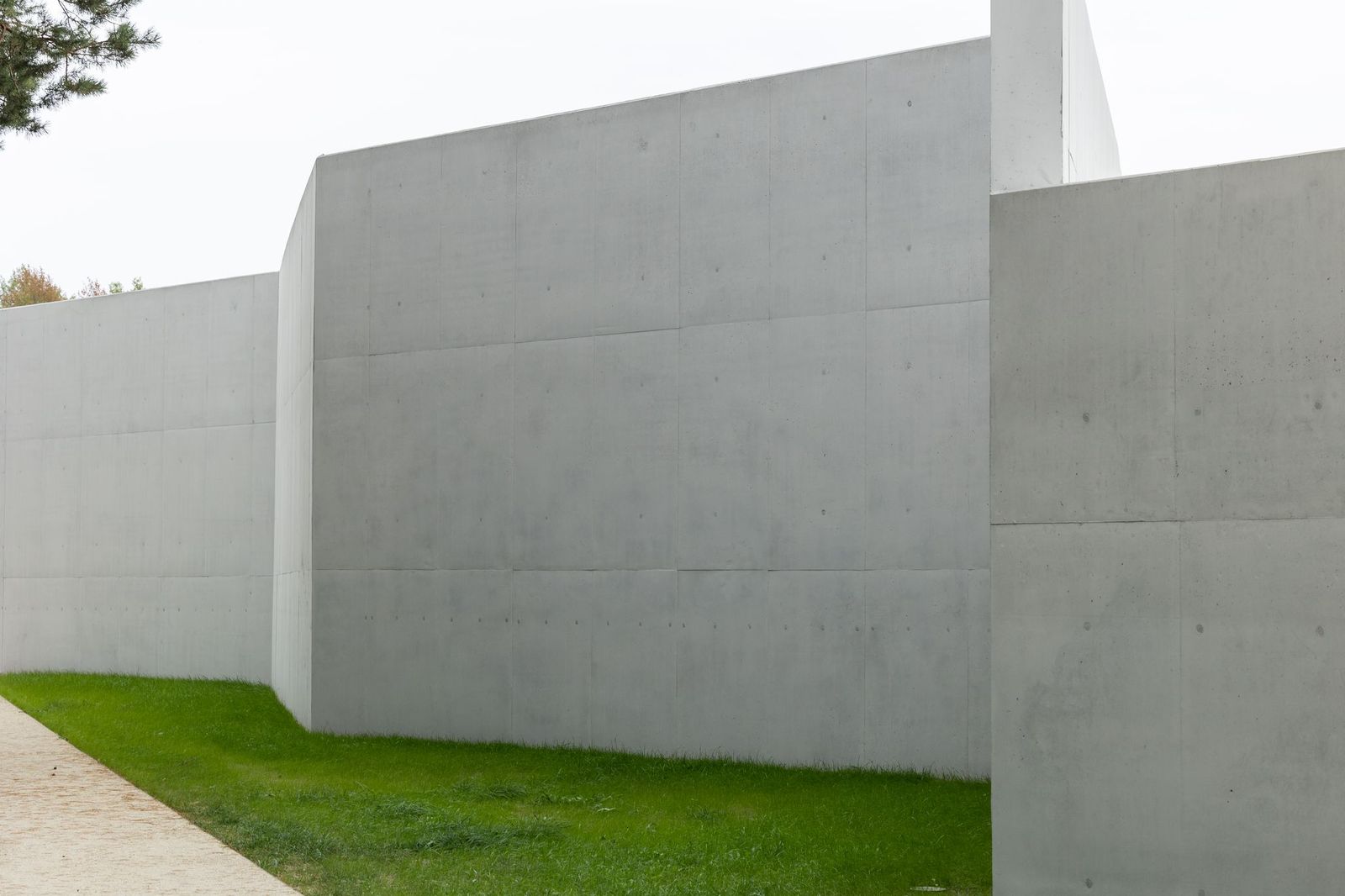
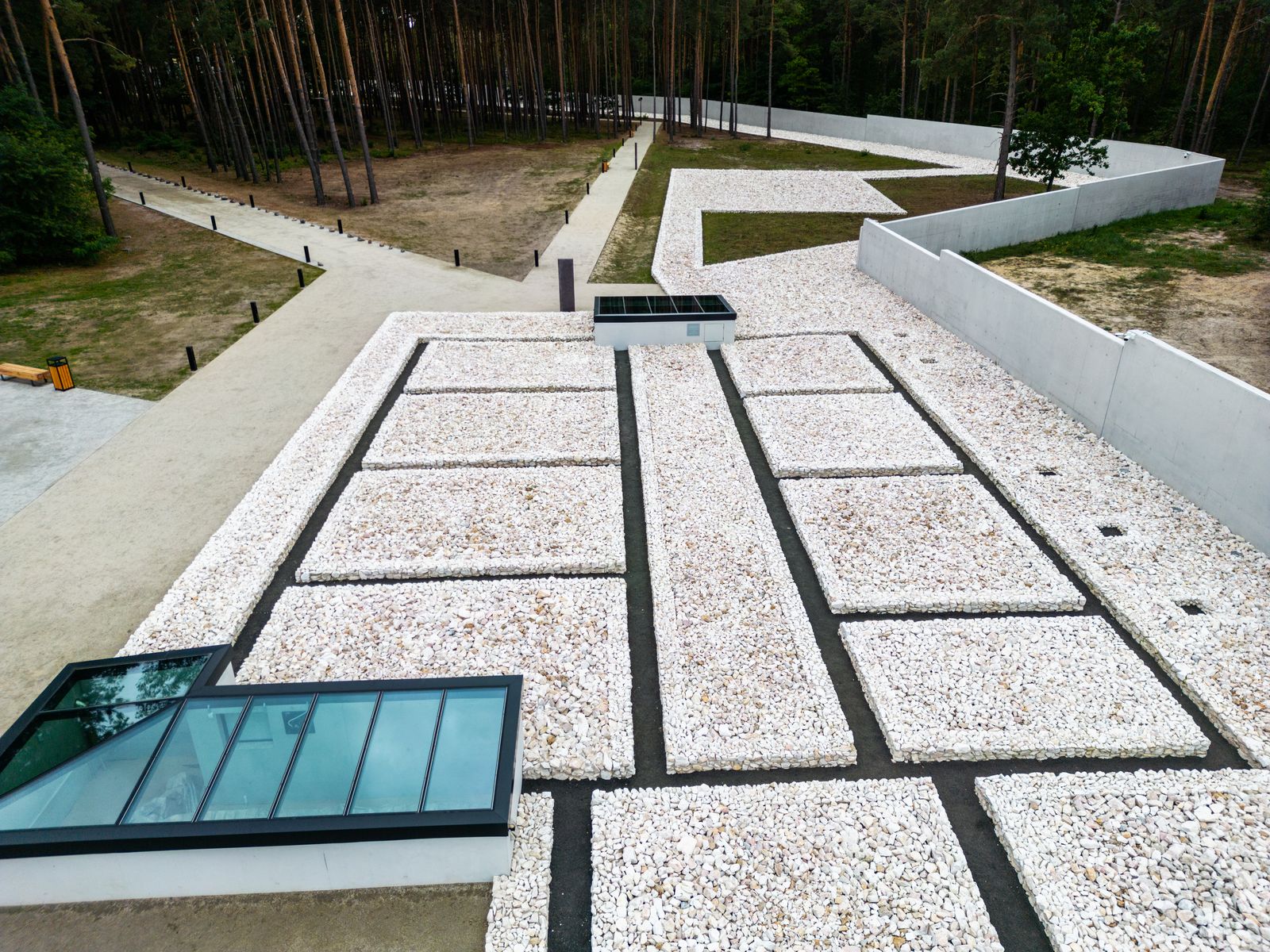
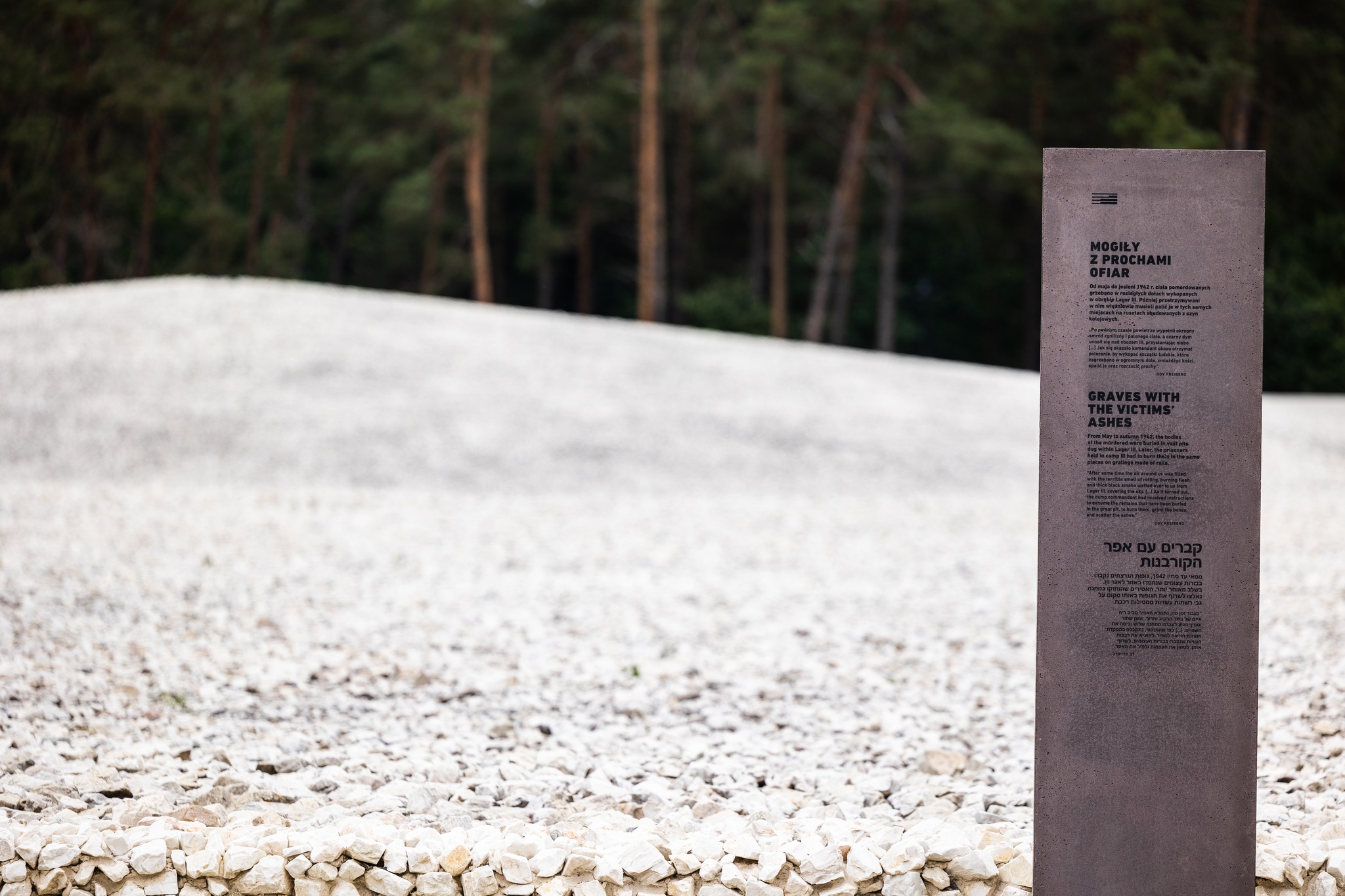
The proper commemoration, securing, and protecting the area with the mass graves, where the victims ashes and remains rest, was the primary objective of the new project. In 2017, the graveyard area was covered with geotextile and white marble aggregate stones. In 2020, the new Museum building was opened. It is designed in a way that directs the visitors attention towards the most historically significant locations of the former camp grounds – the railway ramp where the trains with deportees arrived and the place where they began their final path into the gas chambers. Another panoramic opening from the exhibition hall offers a perspective on the former roll-call square, where the prisoner uprising began. The greyish shades of brown visible on the building’s façade is harmoniously composed with the surrounding landscape.

Mound covered with white aggregate stones, many pine trees are visible in the background.
Clearing with the mass graves

Permanent Exhibition

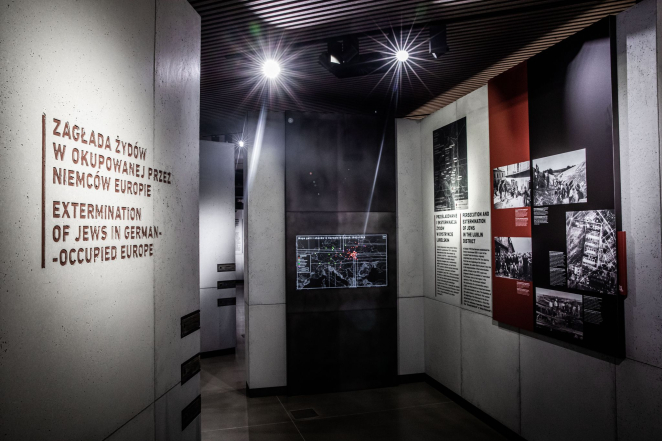
The permanent exhibition SS-Sonderkommando Sobibor. German Death Camp 1942–1943 was opened in October 2020. The concept was prepared by the historians from the State Museum at Majdanek: curator Tomasz Kranz PhD, Dariusz Libionka PhD, and Krzysztof Banach. The exhibition comprises 16 thematic panels which describe the history of the extermination camp in Sobibór while simultaneously highlighting individual victims’ fates and the broader context of the Nazi extermination policies targeting Jews in occupied Poland and Europe in general.

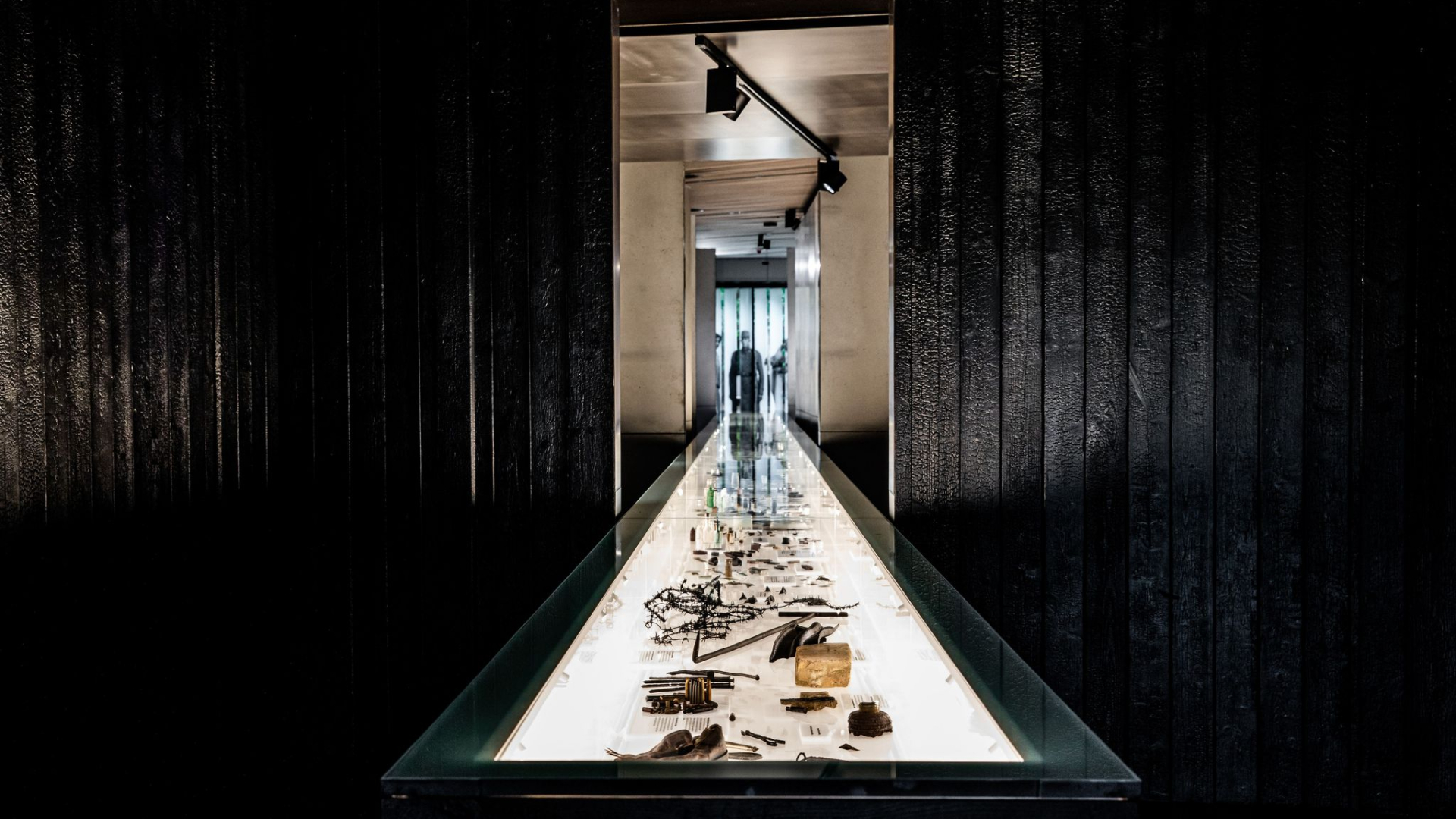
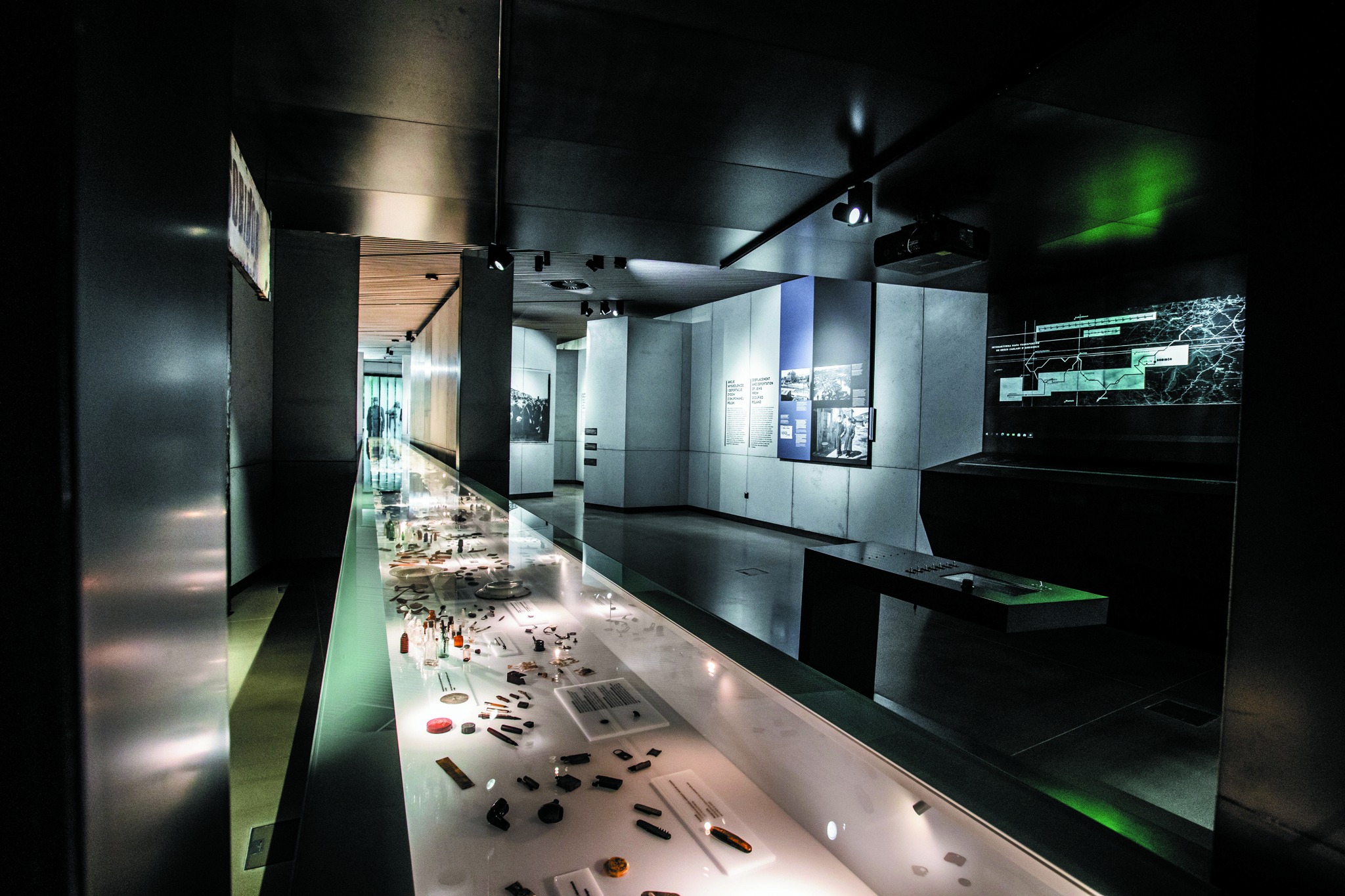
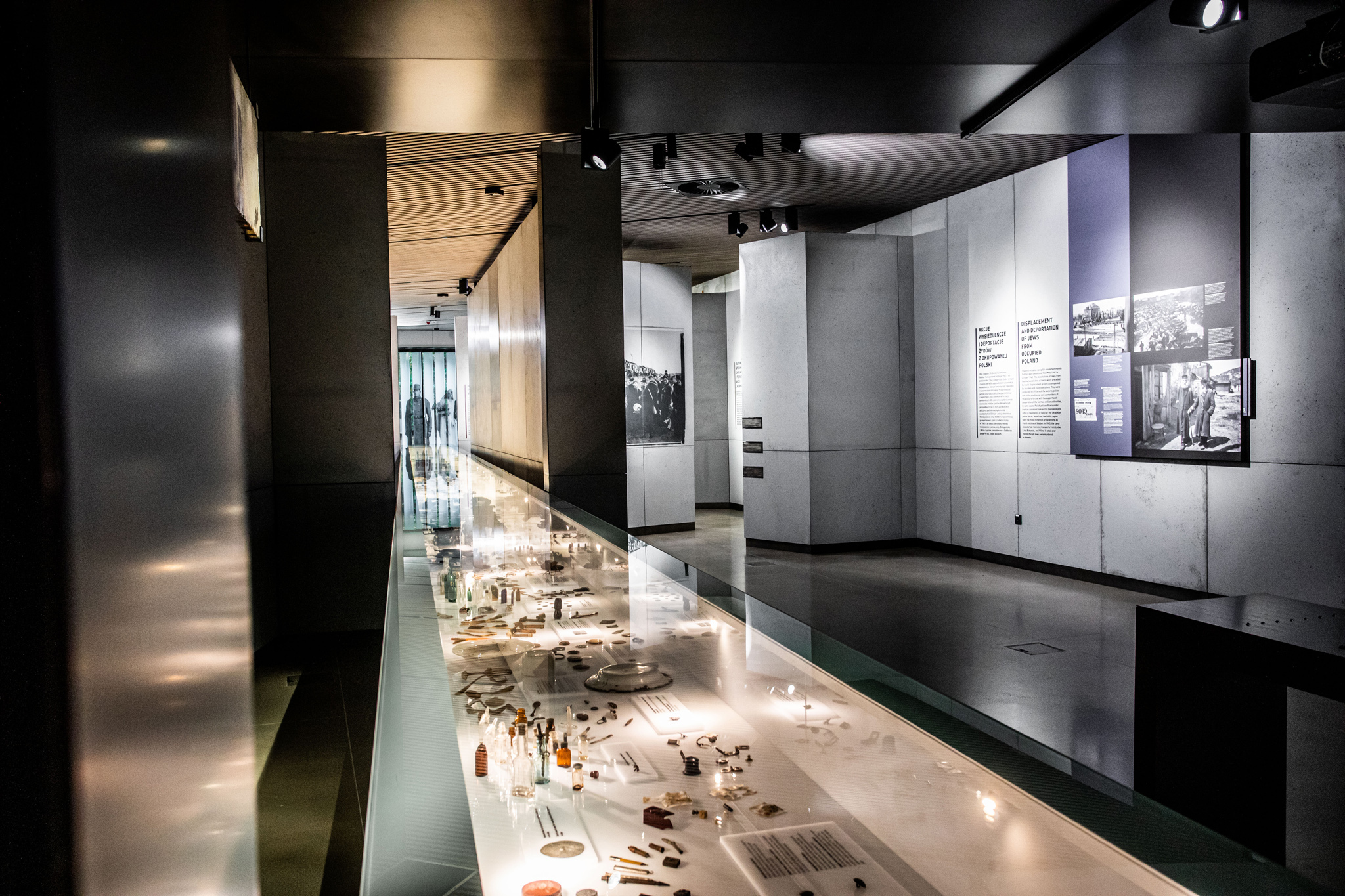
A long, white, bright, glass-fronted display case containing numerous objects, positioned between two black wooden walls.
Display case – the heart of the exhibition presented at the Museum and Memorial in Sobibór

Artefacts

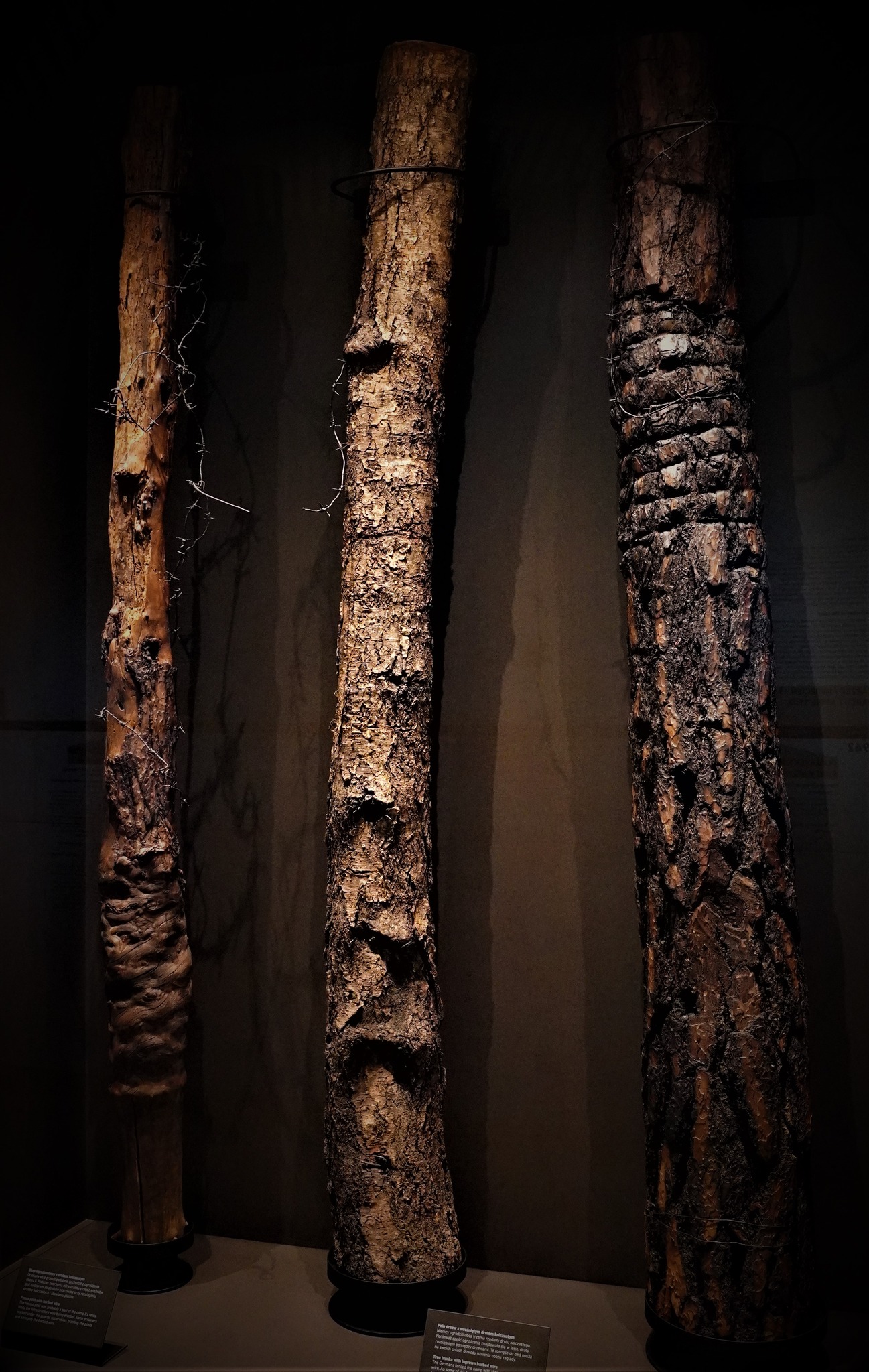
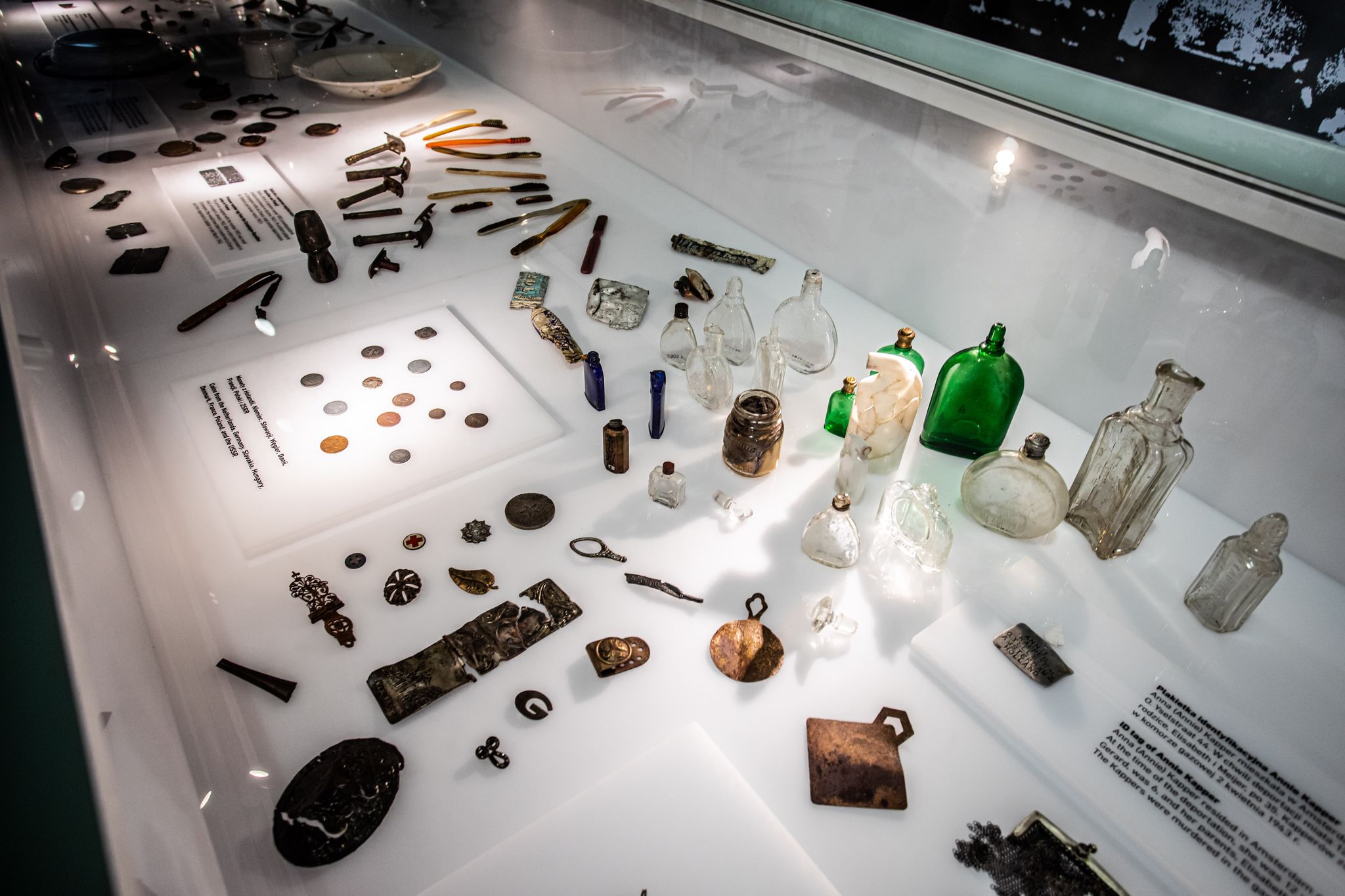
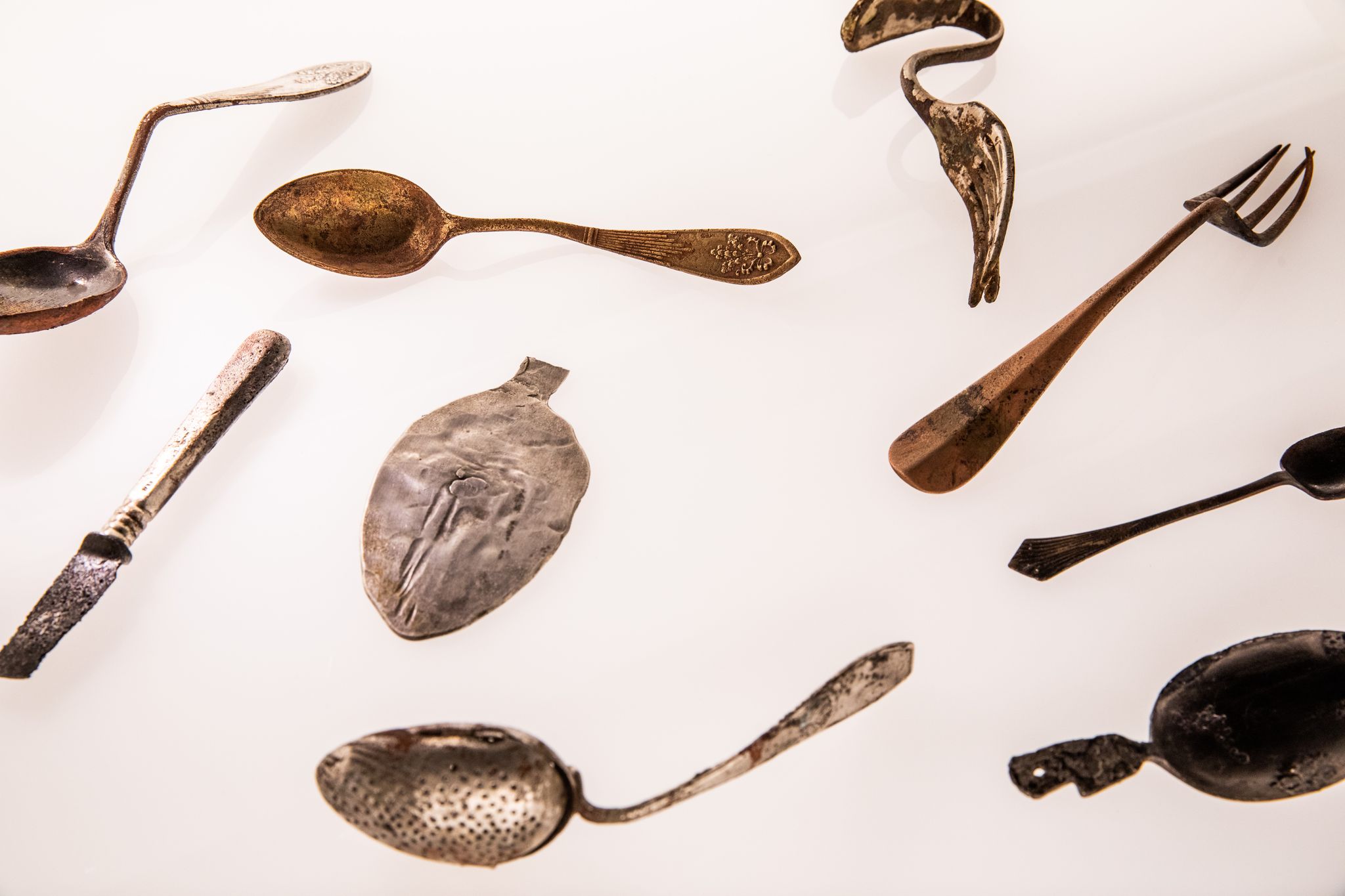
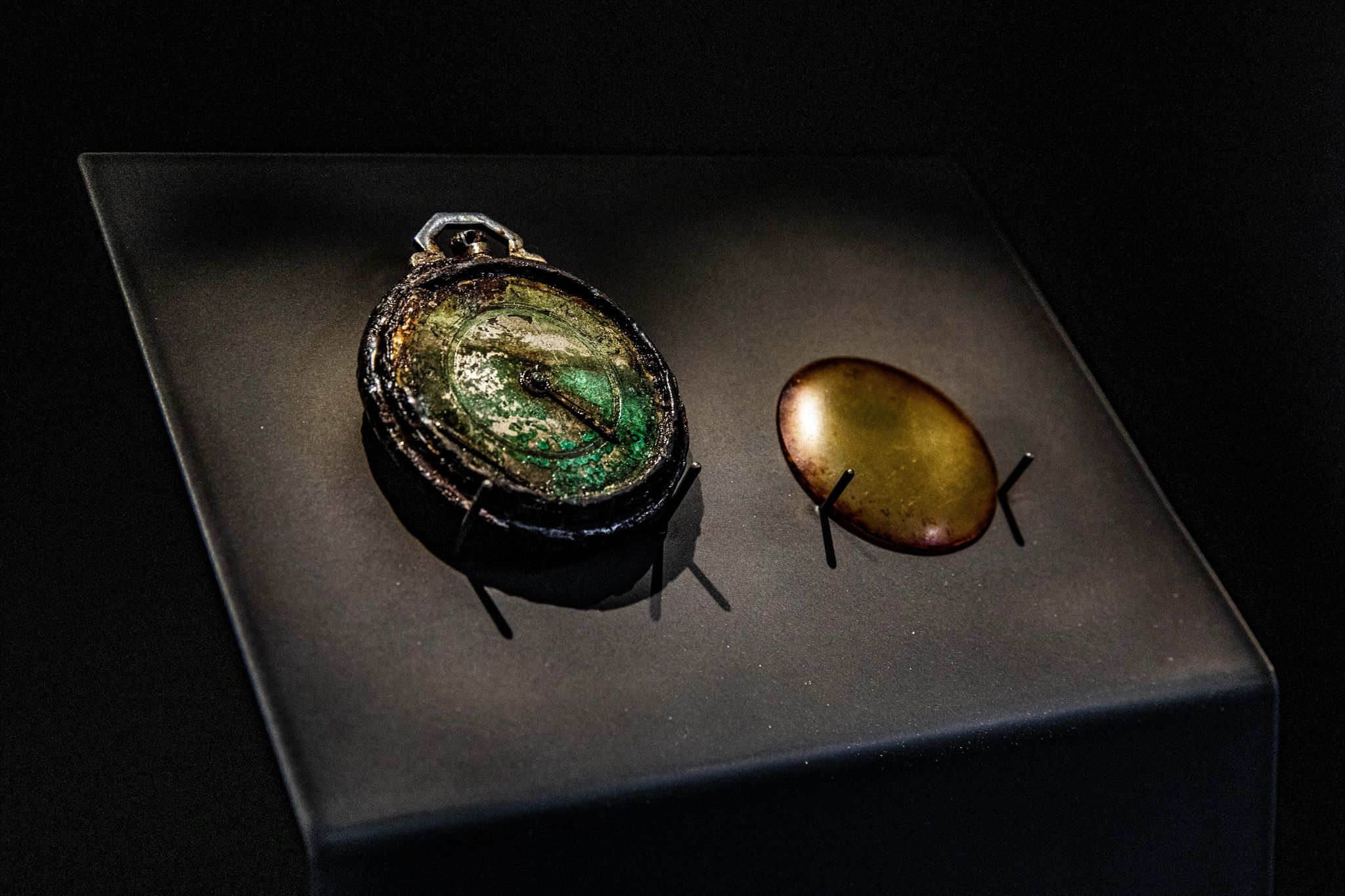
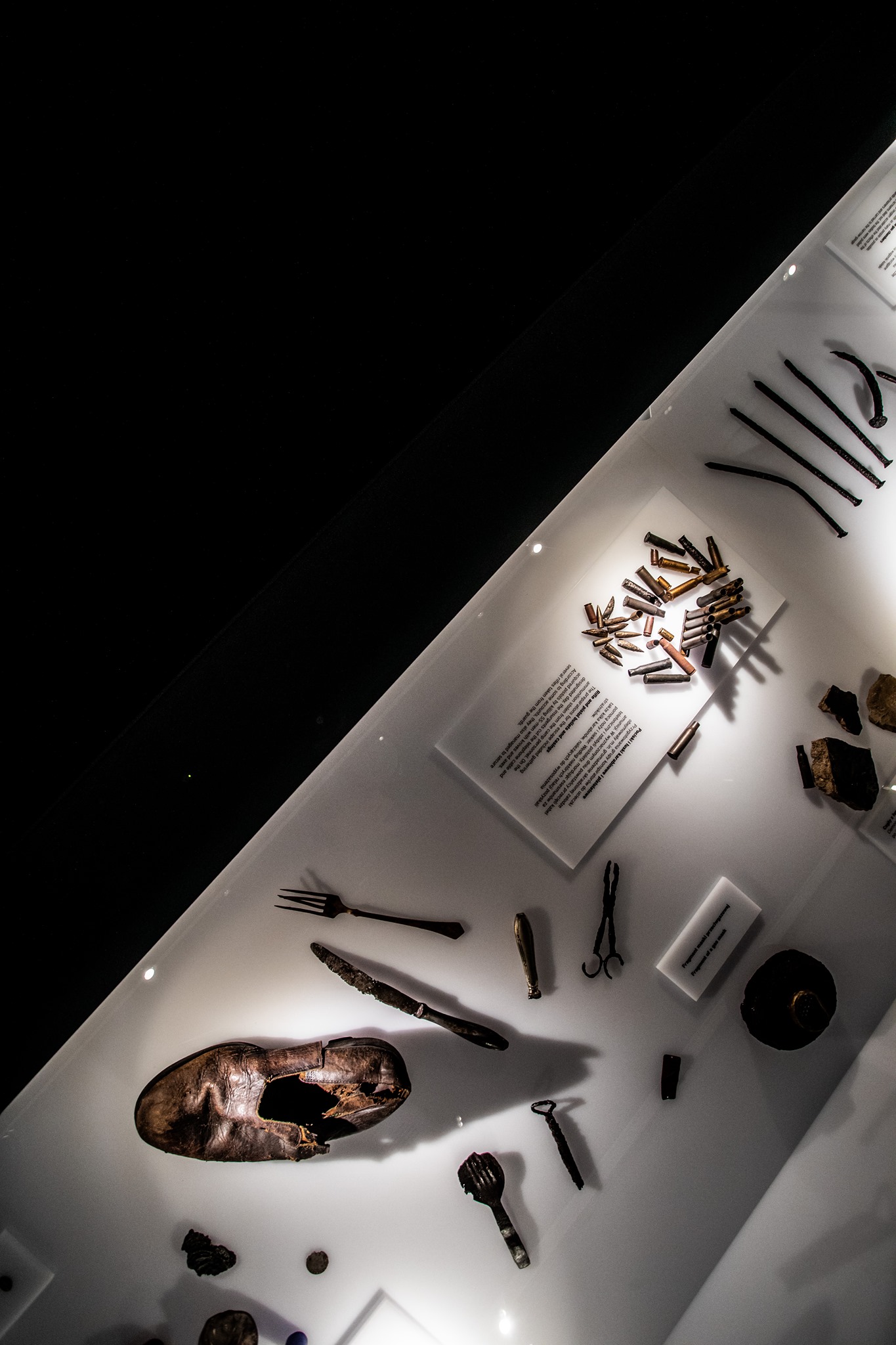
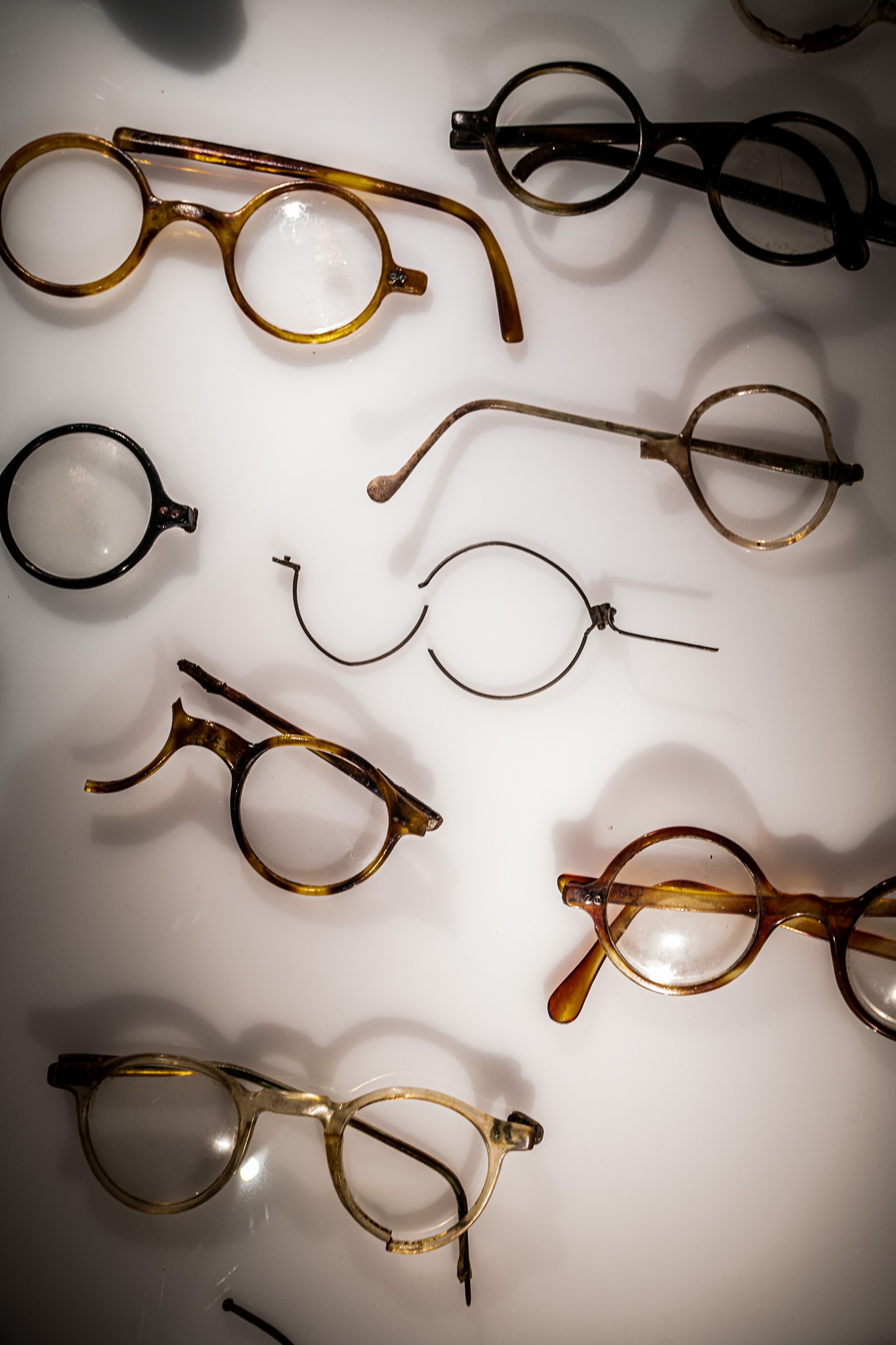
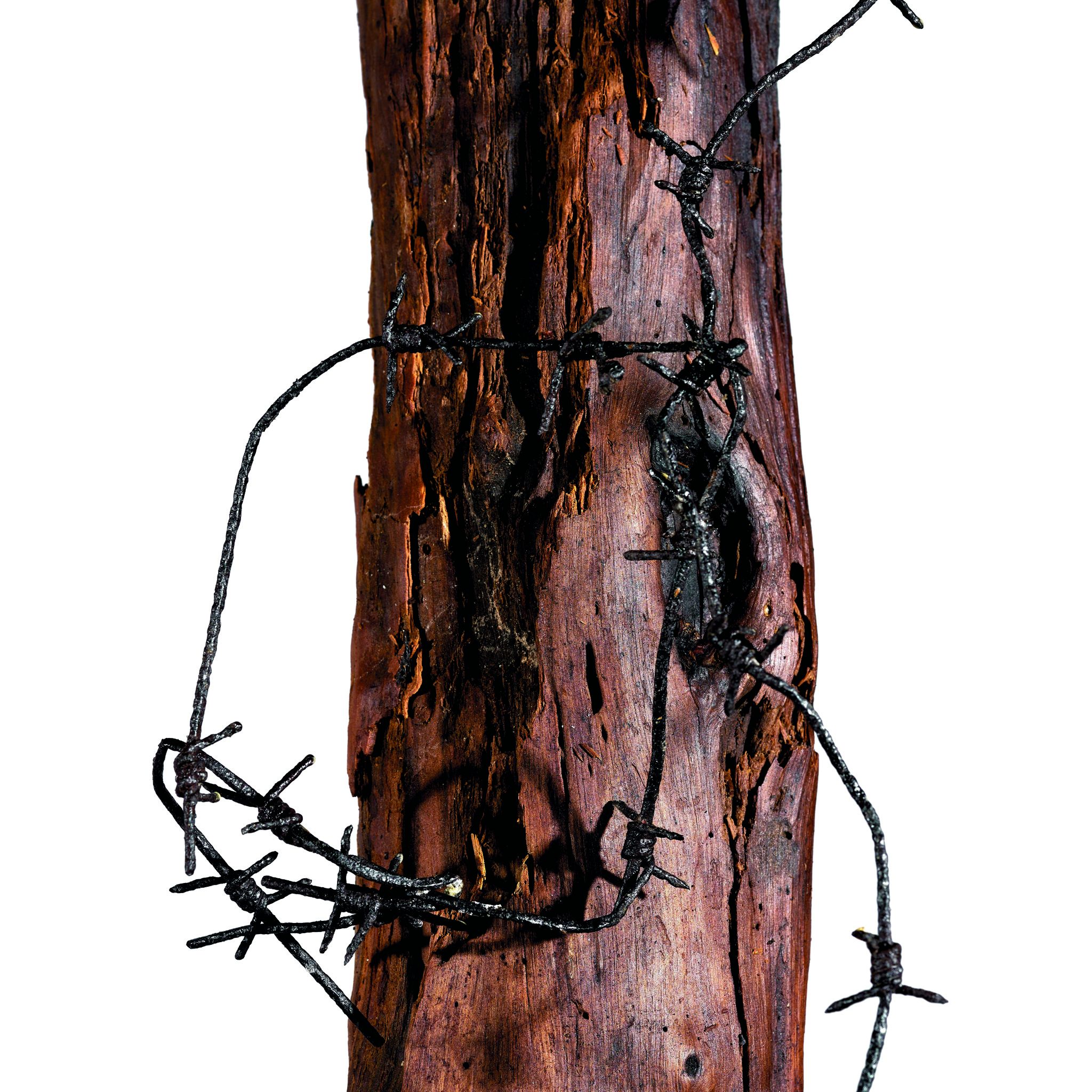
At the heart of the exhibition lies the 25-metre-long display case with 700 artefacts uncovered during the archaeological research initiated in 2000. Those objects are the personal belongings of the victims, mainly jewellery pieces, keys, glasses, pieces of clothing, stationery items. They symbolically represent the fates of their owners, the majority of whom remain anonymous. Another, smaller display case contains the items of the perpetrators: a helmet, Nazi insignia, a torch. Additional objects presented at the exhibition include the elements of the camp infrastructure (a fragment of railways used as a cremation grate, bullets, casings), and its material traces like the wall of one of the barracks, and tree trunks with ingrown barbed wires.

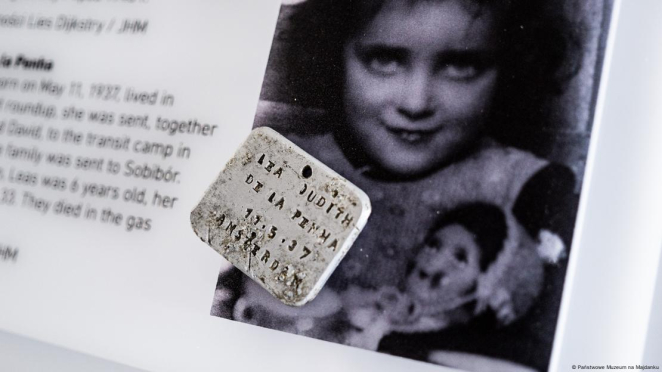
A rectangular metal plaque with an engraving reading: Lea Judith De La Penha, 11 May 1937, Amsterdam; in the background, a photograph of a little girl with brown, curly hair holding a doll.
Identification tag of Lea Judith de la Penha, who was murdered in Sobibór on 9 July 1943.
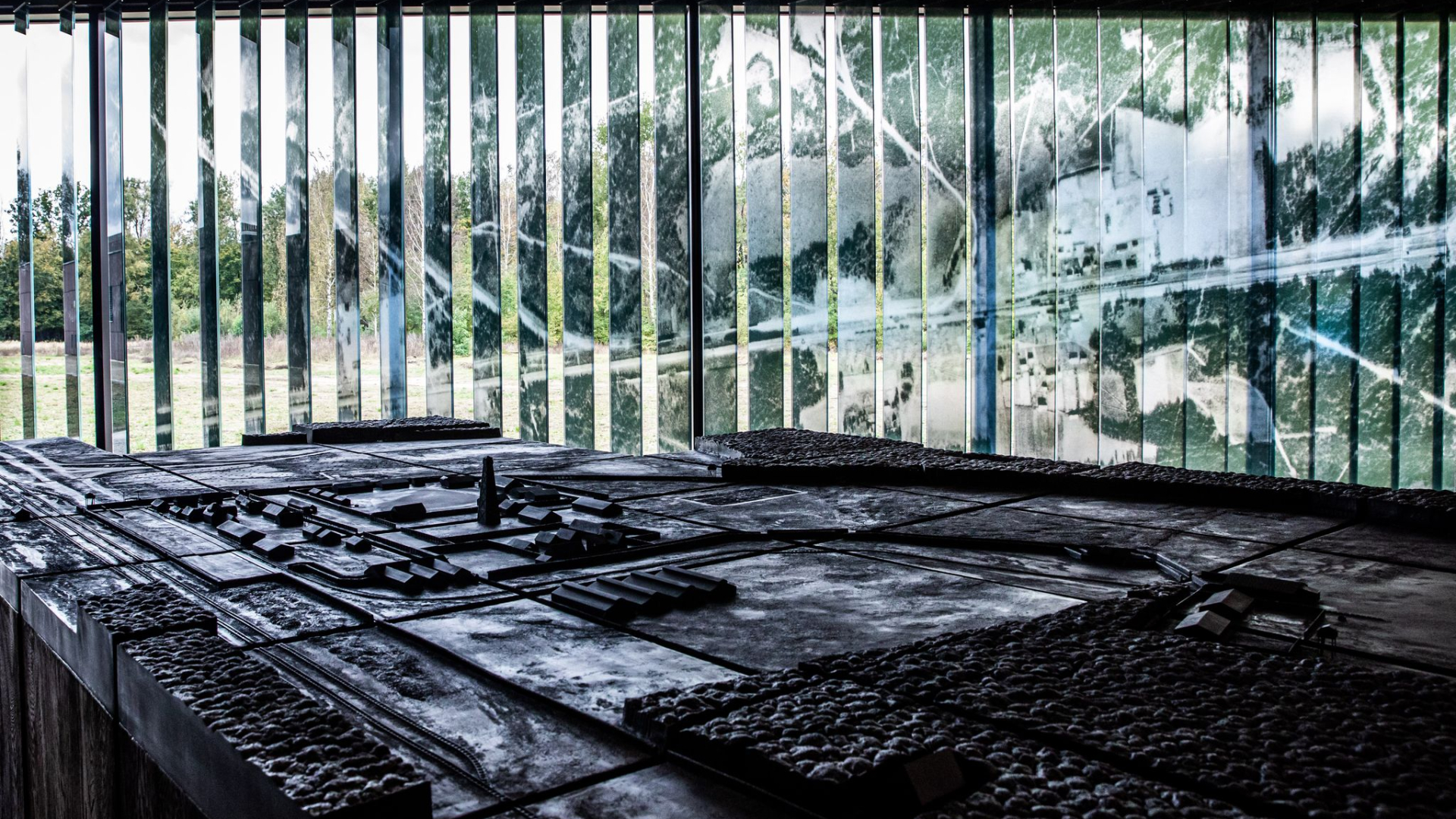
A detailed architectural model of the camp, made from black epoxy resin.
Model of the extermination camp in Sobibór

Visual Sources

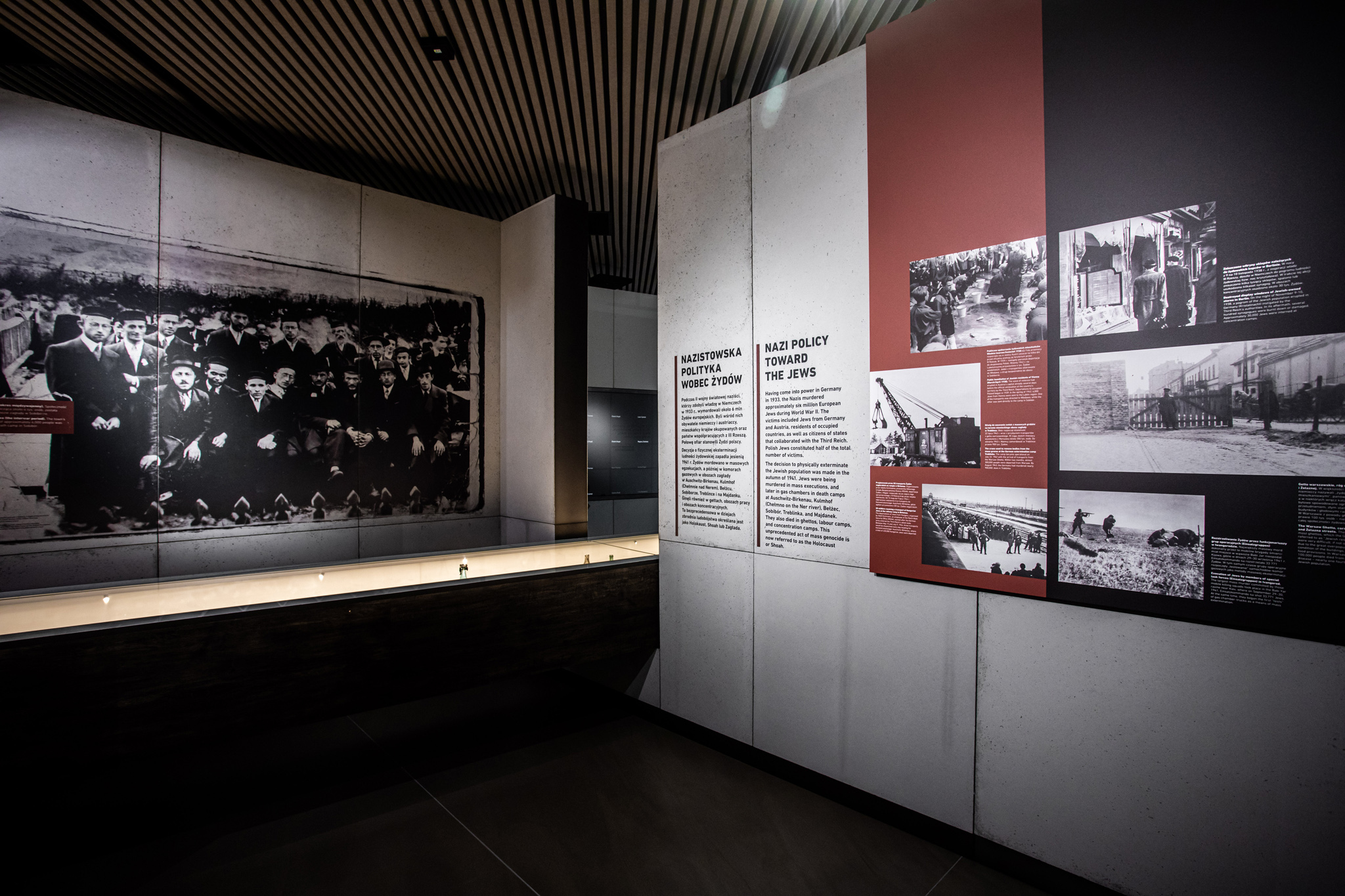
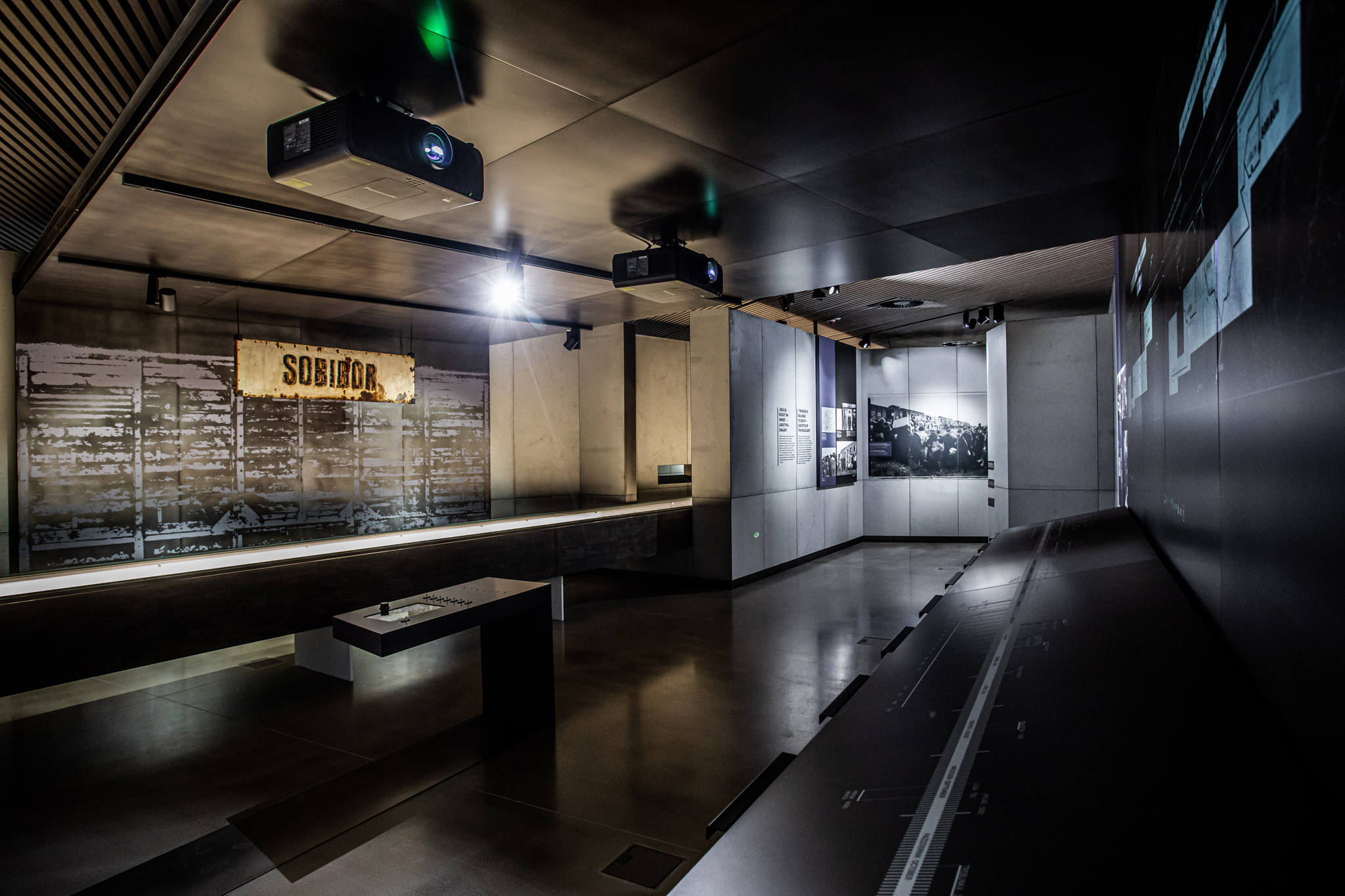
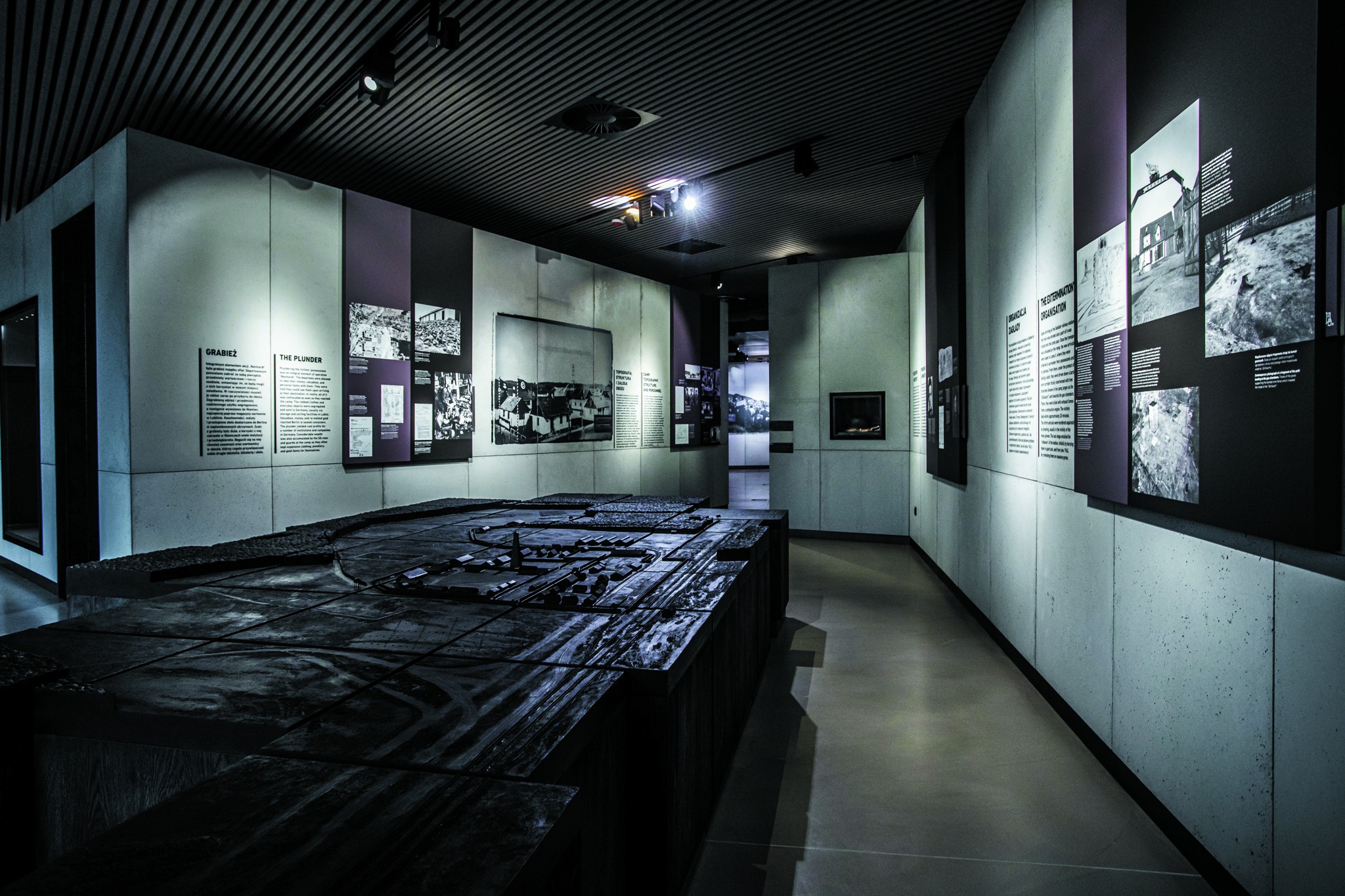
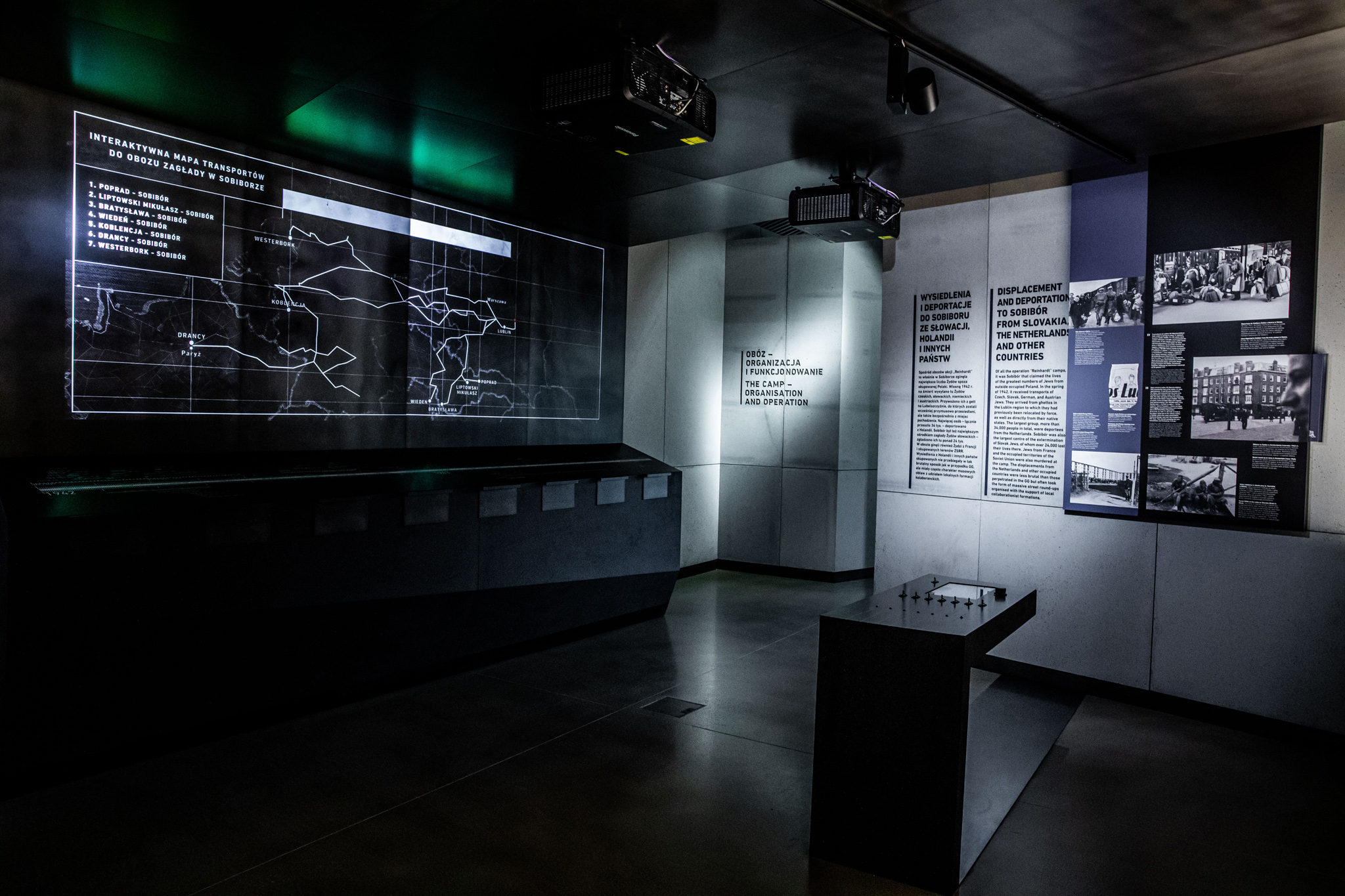
The visual materials presented at the exhibition include nearly one hundred photographs and documents, as well as a digital repository, which allows the visitors to independently delve deeper into the history of the camp. Thanks to combining the photographs, the drawings made by survivors, and the results of the archaeological research we managed to fully reconstruct the camp topography and present it in the form of a scale model. We also gave voice to survivors – their video testimonies are displayed in the final part of the exhibition in the form of a video wall with 36 screens. The visitors can also watch a clip from the Escape from Sobibor feature film, which shows the scenes depicting from the prisoner uprising, and another video showing the course of the archaeological research.

View of the exhibition, a concrete wall visible on the left with the engraved words: extermination of Jews in German-occupied Europe; on the right information panels with documents and archival photographs.

Museum Mission

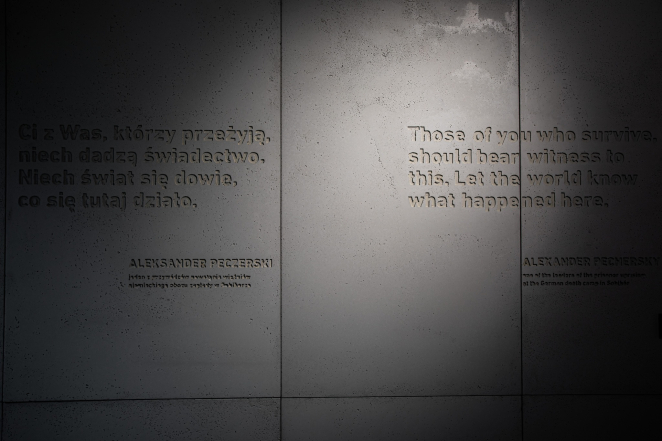
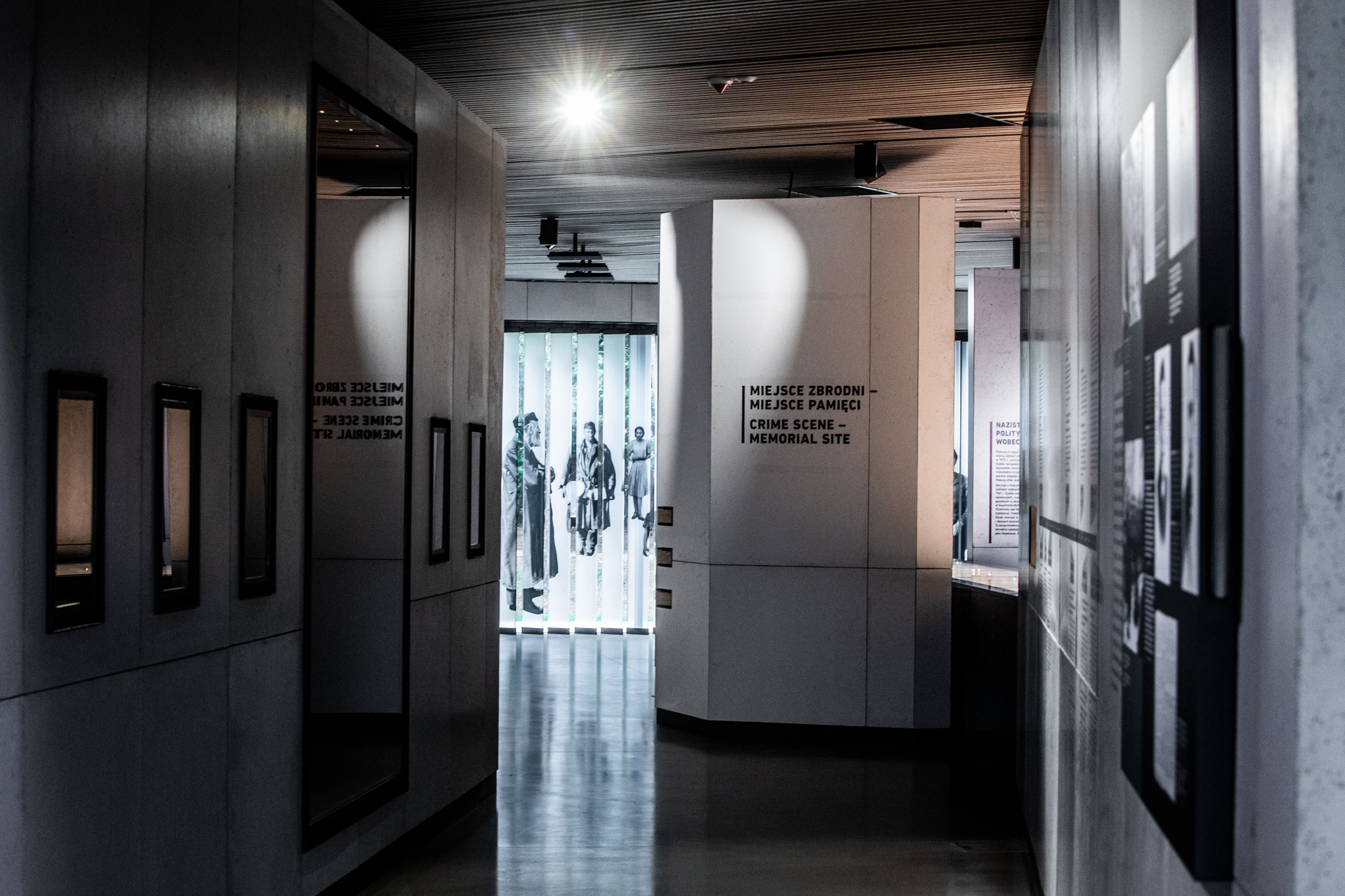
Those of you who survive should bear witness to this. Let the world know what happened here. Those words were uttered by Alexander Pechersky during the prisoner uprising on 14 October 1943. Today they are the obligation of the Museum and Memorial in Sobibór and guide is in our everyday work.

The mission of the Museum is, above all, to reliably convey the knowledge about the history of the German Nazi extermination camp in Sobibór, and to respectfully commemorate the victims. Their voices shall never fall silent, and the testimonies of survivors must reach the future generations.

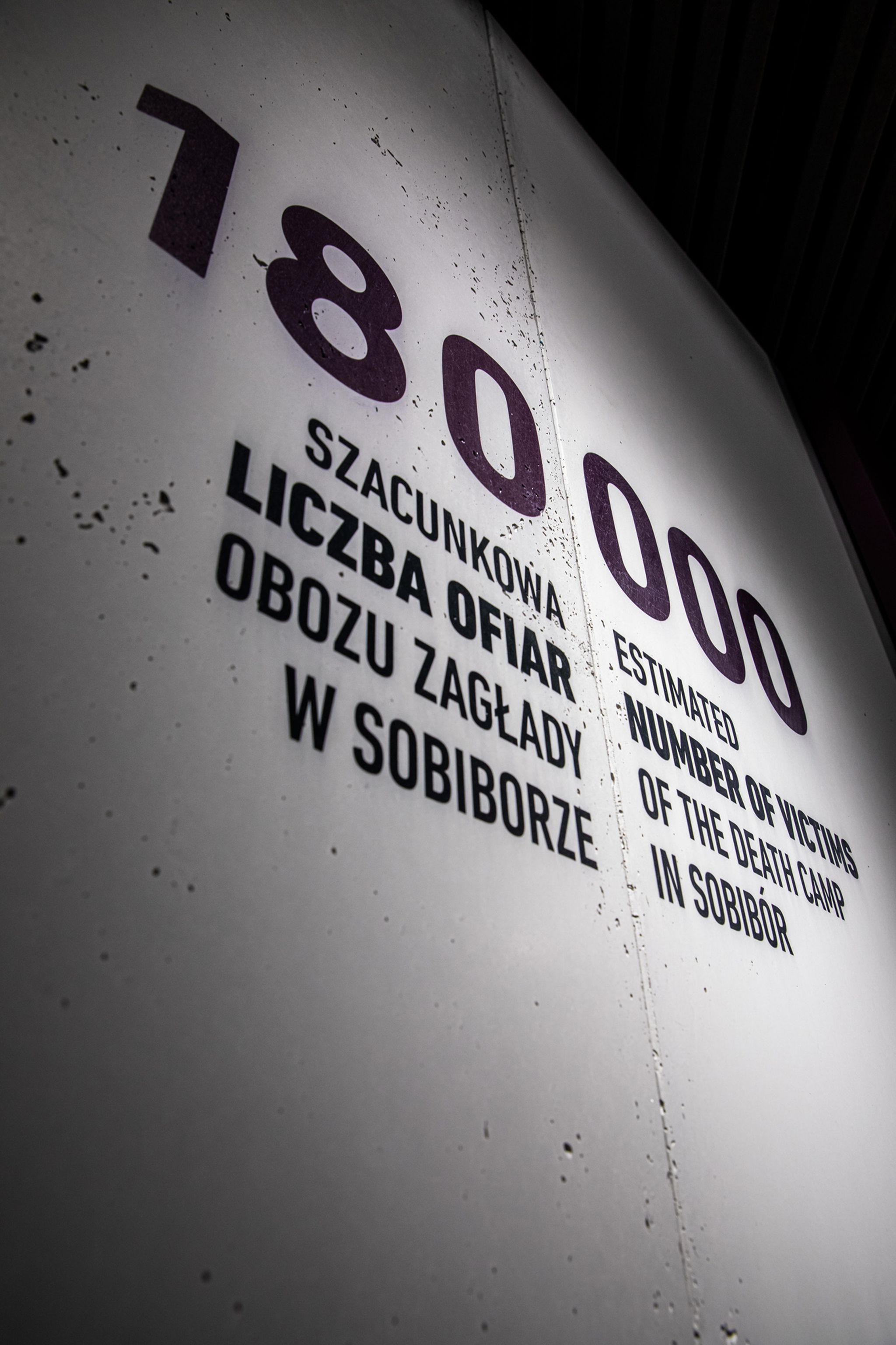
An engraved concrete wall bearing an inscription in Polish and English, half of which is obscured by shadow; the lettering is blurred.

The Museum fulfils this mission through diverse projects and activities including:

  • protecting and maintaining the former camp grounds in a respectful way
  • providing access to the memorial site and the exhibitions to visitors
  • spreading the knowledge about the camp history through educational workshops, museum lessons, lectures, seminars, and exhibitions
  • running and expanding the internal database with the information on the victims of the German Nazi crimes
  • collecting, registering, preserving, and researching archival sources, photographs, testimonies, and artefacts related to the history of the camp
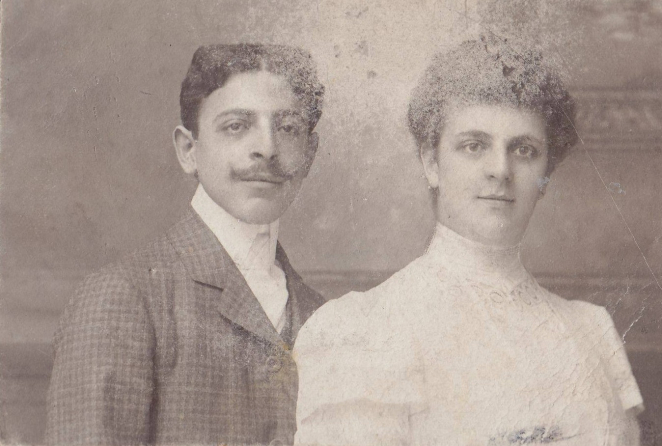
A sepia-toned photograph showing a middle-aged couple: on the left, a man with a moustache and dark hair combed to the sides with a prominent parting; on the right, a woman in a white lace dress with a stand-up collar and her dark hair pinned up high.
Emma and Moritz Kral were deported to the Lublin region from Vienna in April 1942, and later were murdered in Sobibór.
  • participating in international and local cultural projects
  • organising educational and cultural events aiming at inspiring reflections and respectful dialogue about history, memory, and their significance for the present world
  • maintaining cooperation with domestic and foreign institutions dealing with the Holocaust history and remembrance.
Elderly smiling man wearing a hat, glasses, and a red scarf.
Jules Schelvis, author of the first scholarly monograph of the German death camp in Sobibór, and one of the only 19 Dutch Jews, who survived their deportation to the Lublin region.

An aerial view showing a large woodland area, with a space covered in white aggregate in the centre and a visible mound.